Restoring Human Potential Through
Regenerative Precision Medicine
Repair
Not Replace
Cell
Based Therapies
100%
Personalized Protocols
Next
Gen Medicine
Re·gen·er·
a·tive
Pre·ci·sion
/ rəˈjenərətiv ˈpreSHən ˈmedəsən / · noun
noun · restorative molecular medicineThe precision-guided application of cellular therapies, tissue engineering, and biological repair strategies using each patient's genomic, epigenomic, and stem cell profile to restore damaged or degenerated biological systems rather than merely managing their decline.
Origin
From Latin regenerare (to bring forth again) + praecisio (exactness) + medicina (the healing art). Regenerative precision medicine emerged as the convergence of induced pluripotent stem cell (iPSC) technology pioneered by Yamanaka in 2006 — with CRISPR-based gene correction and single-cell transcriptomics made it possible to engineer patient-matched biological repair strategies targeting the specific molecular defects underlying each individual's tissue failure.
The Regenerative Precision Medicine Department at the American Board of Precision Medicine trains clinicians to understand and apply the emerging frontier of biological restoration integrating stem cell biology, gene therapy vectors, extracellular vesicle signaling, and scaffold-based tissue engineering into individualized treatment architectures guided by each patient's unique cellular and genomic landscape.
From CAR-T cell engineering and iPSC-derived tissue grafts to senolytic clearance protocols, exosome-mediated epigenetic reprogramming, and CRISPR correction of monogenic disease, this department equips physicians with the scientific literacy to evaluate, select, and monitor regenerative interventions distinguishing validated cellular therapies from unproven treatments in a rapidly evolving clinical landscape.
The body retains a profound capacity for repair but that capacity is not uniform. It is molecularly specific, patient-dependent, and time-sensitive. At ABOPM, Regenerative Precision Medicine provides the biological and clinical framework to harness that capacity with precision — matching each patient's repair biology to the intervention most likely to achieve durable, meaningful restoration.
Repair
Not Just Manage
Cell
Matched Therapies
Gene
Level Correction
Where Precision Biology Unlocks
The Body's Capacity for Repair
The Regenerative Precision Medicine Department at ABOPM is redefining what treatment means training physicians to move beyond symptom management and harness the science of biological restoration, integrating stem cell biology, gene therapy, and cellular engineering into individualized repair strategies guided by each patient's unique genomic, epigenomic, and molecular landscape.
Advancing clinical application of CAR-T cell engineering, iPSC-derived tissue grafts, CRISPR-based gene correction, and senolytic clearance protocols enabling physicians to understand, evaluate, and select precision-guided cellular therapies matched to each patient's specific molecular defects and repair biology.
Bridging molecular biology and clinical restoration developing board-certified frameworks for exosome-mediated epigenetic reprogramming, extracellular vesicle signaling, scaffold-based tissue engineering, and mitochondrial biogenesis protocols that harness the body's endogenous repair machinery with molecular precision.
Building the next generation of regenerative precision physicians through rigorous board standards, stem cell and gene therapy literacy, and interdisciplinary collaboration across molecular biology, clinical genomics, translational pharmacology, bioengineering, and aging science.
"The body retains a profound capacity for repair but that capacity is molecularly specific, patient-dependent, and time-sensitive. The Regenerative Precision Medicine Department at ABOPM trains physicians to harness that capacity with precision, matching each patient's repair biology to the intervention most likely to achieve durable, meaningful restoration."
American Board of Precision Medicine · Regenerative Precision Medicine DepartmentMatching Each Patient's Repair Biology
to Deliver Restoration, Not Just Management
The human body retains a profound capacity for repair — but that capacity is not uniform, not unlimited, and not randomly distributed. Behind every degenerated tissue, every senescent cell burden, and every treatment-refractory chronic disease lies a specific molecular failure of regenerative biology - genomic defects unrepaired, epigenetic programs locked in dysfunction, stem cell niches depleted, and cellular repair machinery silenced in patterns that conventional pharmacology was never designed to restore. Harnessing each patient's specific regenerative architecture to achieve biological restoration rather than symptom suppression is not a distant aspiration — it is the cellular and genomic obligation of modern precision medicine.
Regenerative precision medicine equips clinicians to move beyond disease management and into the science of biological repair applying stem cell biology, gene therapy, cellular engineering, and epigenomic reprogramming to design patient-matched restoration strategies that address the molecular root causes of tissue failure with a specificity no conventional therapy can provide.
By mastering regenerative precision medicine, clinicians gain the power to:
Why Regenerative Precision Medicine Certification Is Non-Negotiable
Every patient has a repair biology. The question is, are you equipped to harness it?
Precision-guided regenerative strategies consistently outperform symptom management in tissue failure, inherited disease, and biological aging delivering measurably better outcomes by addressing the molecular root causes of cellular dysfunction and repair failure rather than suppressing their downstream clinical manifestations with indefinite pharmacological management.
CAR-T and CAR-NK therapies, iPSC-derived organoids, in vivo CRISPR delivery, senolytic drugs, and epigenetic reprogramming agents are moving from research to routine clinical application - physicians board-certified in regenerative precision medicine will define the next frontier of biological restoration in clinical practice.
Board certification in regenerative precision medicine marks you as the cellular therapy and biological repair authority - a physician equipped to lead gene and cell therapy programs, longevity medicine clinics, and institutional regenerative medicine initiatives that responsibly translate the cutting edge of repair biology into clinical outcomes.
Regenerative precision medicine principles apply universally across hematology, oncology, neurology, musculoskeletal medicine, cardiovascular disease, and aging science giving you a biology-first restoration framework to address the molecular root causes of tissue failure across every specialty and patient population you serve.
Active research areas driving regenerative precision medicine forward:
The regenerative medicine revolution is not a future event — it is rewriting what treatment means today. iPSC-derived cell therapies, CRISPR gene correction, CAR-T cellular immunotherapy, senolytic drug development, and extracellular vesicle platforms are actively transforming how tissue failure, inherited disease, and biological aging are addressed at the molecular and individual patient level — moving medicine from management to restoration.
The ABOPM Regenerative Precision Medicine Department positions clinicians at the center of this transformation — equipping them with the stem cell biology literacy, gene and cell therapy evaluation frameworks, and board-certified credentials to lead precision biological restoration programs across every disease domain and patient population.
Meet Our Leadership
Director of Regenerative Precision Medicine
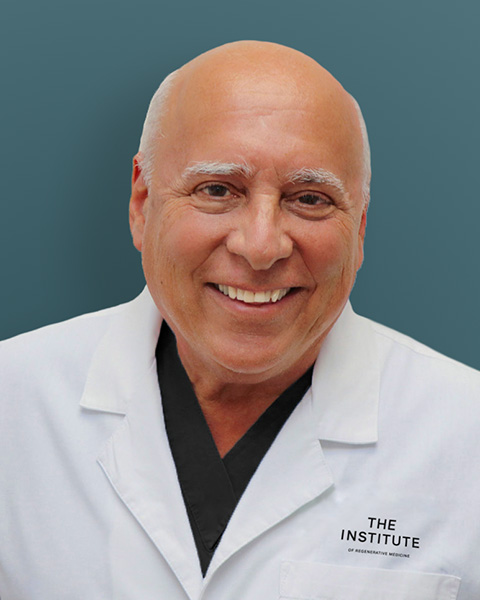
Joseph Purita, MD, FACS, FAAOS, FAASCP
Dr. Purita is a board-certified orthopedic surgeon with over 20 years of expertise in cellular and anti-aging therapies within the field of Regenerative Medicine. He completed his medical education and training at Georgetown University and has since become a globally recognized leader in advancing innovative treatment approaches.
He served as the inaugural president of the American Academy and Board of Regenerative Medicine and currently serves as Medical Director of Pur-Form and its nationwide network. His contributions include numerous scientific publications and book chapters, and he was recently appointed Professor of Regenerative Medicine at the University of Max Planck in Indaiatuba, Brazil — a sought-after speaker who has lectured extensively worldwide on regenerative medicine and cellular therapies.
Faculty Members
Our faculty roster is growing — announcements coming soon.
Faculty position open
Faculty position open
Faculty position open
Faculty position open
Think you're the right fit for a faculty position?
Get Involved →
Shaping the Future
of Precision Medicine
As precision medicine continues to evolve, genomics will play an increasingly central role in redefining how disease is understood, predicted, and treated at the molecular level.
The Genomics Department at ABOPM remains committed to advancing this field through scientific leadership, clinical innovation, and collaborative discovery. Together with our global community of physicians and researchers, we are helping shape the future of next-generation healthcare.
Insights Shaping
Precision Medicine
Explore ABOPM perspectives on genomics, multi-omics, systems thinking, clinical innovation, and the future of physician leadership in precision medicine.
Eight Advances in Precision Medicine: What Clinicians Need to Know
Explore eight advances in precision medicine, from rapid genomic sequencing and targeted cancer therapies to gene therapy, and discover what these breakthroughs mean for clinical practice. ...more
On the Frontier
October 22, 2026•10 min read
Digital Biomarkers and Wearable Health Data
Explore how digital biomarkers and wearable technologies are enabling continuous health monitoring, early disease detection, and more personalized approaches to precision medicine. ...more
On the Frontier
October 15, 2026•8 min read
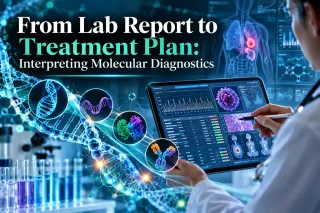
From Lab Report to Treatment Plan: Interpreting Molecular Diagnostics
Explore how clinicians interpret molecular diagnostic reports and translate genomic, transcriptomic, and proteomic findings into informed, personalized treatment decisions. ...more
Precision Medicine in Action
October 08, 2026•8 min read
Stay at the Forefront of Precision Medicine
Subscribe to receive ABOPM insights, research updates, and educational resources delivered directly to your inbox.
Advancing education, certification, and leadership to shape a genomics-driven, data-intelligent future of healthcare.
COMPANY
RESOURCES


© 2023-2025 American Board of Precision Medicine, Inc. All Rights Reserved.