The Full Picture Through
Multi-Omics Integration
6+
Omic Layers
Billions
Data Points
100%
Patient-Centered
Board
Certified Standard
Sys·tems
Bi·ol·o·gy
/ ˈsistəmz bīˈäləjē / · noun
noun · computational biologyThe quantitative, model-driven study of biological systems as integrated wholes — mapping the dynamic interactions between genes, proteins, metabolites, and cellular networks to understand how emergent properties of health and disease arise from molecular complexity.
Origin
From Greek systēma (organized whole) + Latin biologia (study of life). Systems biology emerged as a formal discipline in the early 2000s — pioneered by Leroy Hood and colleagues — in direct response to the reductionist limits of molecular biology, which had catalogued individual components without explaining how their interactions produce living function or complex disease.
The Systems Biology Department at the American Board of Precision Medicine trains clinicians to think beyond individual biomarkers and isolated pathways — integrating transcriptomic, proteomic, metabolomic, and epigenomic data into dynamic computational models that reveal how biological networks maintain health, break down in disease, and respond to intervention.
From gene regulatory network modeling and Boolean pathway simulations to flux balance analysis, attractor state theory, and multi-scale biological modeling, this department equips physicians with the quantitative literacy to interpret complex omic datasets not as static snapshots, but as windows into the living dynamics of human physiology — and the points of leverage within them.
Disease does not arise from a single broken gene — it emerges from the reorganization of entire biological networks. At ABOPM, Systems Biology provides the computational and conceptual framework that transforms raw omic data into a map of the body as it truly operates: interconnected, dynamic, and deeply individual.
20k+
Interacting Genes
Network
Disease Modeling
Multi
Scale Integration
Where Network Science Meets
Clinical Purpose
The Systems Biology Department at ABOPM operates at the convergence of computational modeling and patient care — training physicians to understand biological networks, emergent disease mechanisms, and dynamic pathway interactions, and to translate that systems-level understanding into transformative clinical outcomes across every specialty.
Advancing research in biological network modeling, protein interaction maps, gene regulatory circuits, and signal transduction dynamics — revealing how perturbations propagate across complex living systems to drive health and disease.
Bridging systems biology science and bedside medicine — developing board-certified frameworks for network-based disease stratification, emergent phenotype interpretation, and systems-informed precision therapeutics across complex and chronic conditions.
Building the next generation of systems medicine clinicians through rigorous board standards, interdisciplinary training, and collaboration across computational biology, bioinformatics, network pharmacology, oncology, and translational research.
"No single pathway tells the full story. The Systems Biology Department at ABOPM trains physicians to think in networks — modeling how genes, proteins, metabolites, and cells interact dynamically to produce the emergent reality of human health and disease."
American Board of Precision Medicine · Systems Biology DepartmentTranslating Network Science
Into Clinical Impact
Living systems are not collections of isolated parts. Genes regulate proteins, proteins shape metabolites, metabolites influence the microbiome, and every layer feeds back on every other. Understanding biology as an integrated network is not a research luxury — it is the clinical foundation the future of medicine demands.
Systems biology equips clinicians to move beyond reductionist diagnoses and into network-level understanding — revealing how perturbations propagate across biological circuits, identifying emergent disease signatures no single biomarker can capture, and delivering care that addresses the true complexity of each patient's biology.
By mastering systems biology, clinicians gain the power to:
Why Systems Biology Fluency Is Non-Negotiable
The networks are mapped. The tools are clinical-grade. The question is, are you ready to use them?
Systems-level diagnosis and treatment consistently outperforms single-target approaches in complex and chronic disease — delivering measurably better outcomes by addressing the network, not just the symptom.
Network medicine, digital twins, and AI-driven pathway analysis are entering clinical workflows across oncology, neurology, and chronic disease — physicians fluent in systems biology will lead this transformation.
Board certification in systems biology marks you as the physician who sees the whole network — a rare systems-trained clinician capable of leading precision medicine and network medicine programs at the institutional level.
Systems biology transcends every specialty — oncology, immunology, neurology, endocrinology, cardiology, and beyond — giving you a universal framework to address the most complex biological challenges across all of medicine.
Active research areas driving systems biology forward:
The network medicine revolution is not a future event — it is happening now. Biological network modeling, disease module identification, and computational systems analysis are actively reshaping how complex disease is understood, classified, and targeted at the systems level across every clinical discipline.
The ABOPM Systems Biology Department positions clinicians at the center of this transformation — equipping them with the network science literacy, computational frameworks, and board-certified credentials to lead systems-level medicine in any specialty.
Meet Our Leadership
Director of Systems Biology

Lee Hood, MD, PhD
Dr. Leroy Hood is one of the world's most distinguished biomedical scientists and a founding pioneer of systems biology. He co-founded the Institute for Systems Biology in 2000 and served as its first President until 2017. He is one of only a small number of people worldwide elected to all three U.S. National Academies: Sciences, Engineering, and Medicine.
With an MD from Johns Hopkins and a PhD from Caltech, Dr. Hood spent 25 years on the Caltech faculty, chaired the Biology Department, and helped develop the instruments critical to the Human Genome Project. He later founded the Department of Molecular Biotechnology at the University of Washington and co-founded 15 biotechnology companies, including Amgen and Applied Biosystems.
His research spans Alzheimer's disease, cancer, wellness science, and a pioneering one-million-patient genome/phenome project. He has authored more than 850 peer-reviewed publications and holds 36 patents. His major honors include the Lasker Award, Kyoto Prize, and the Fritz J. and Delores H. Russ Prize.
Director of Precision Pathology, Systems Biology & Research
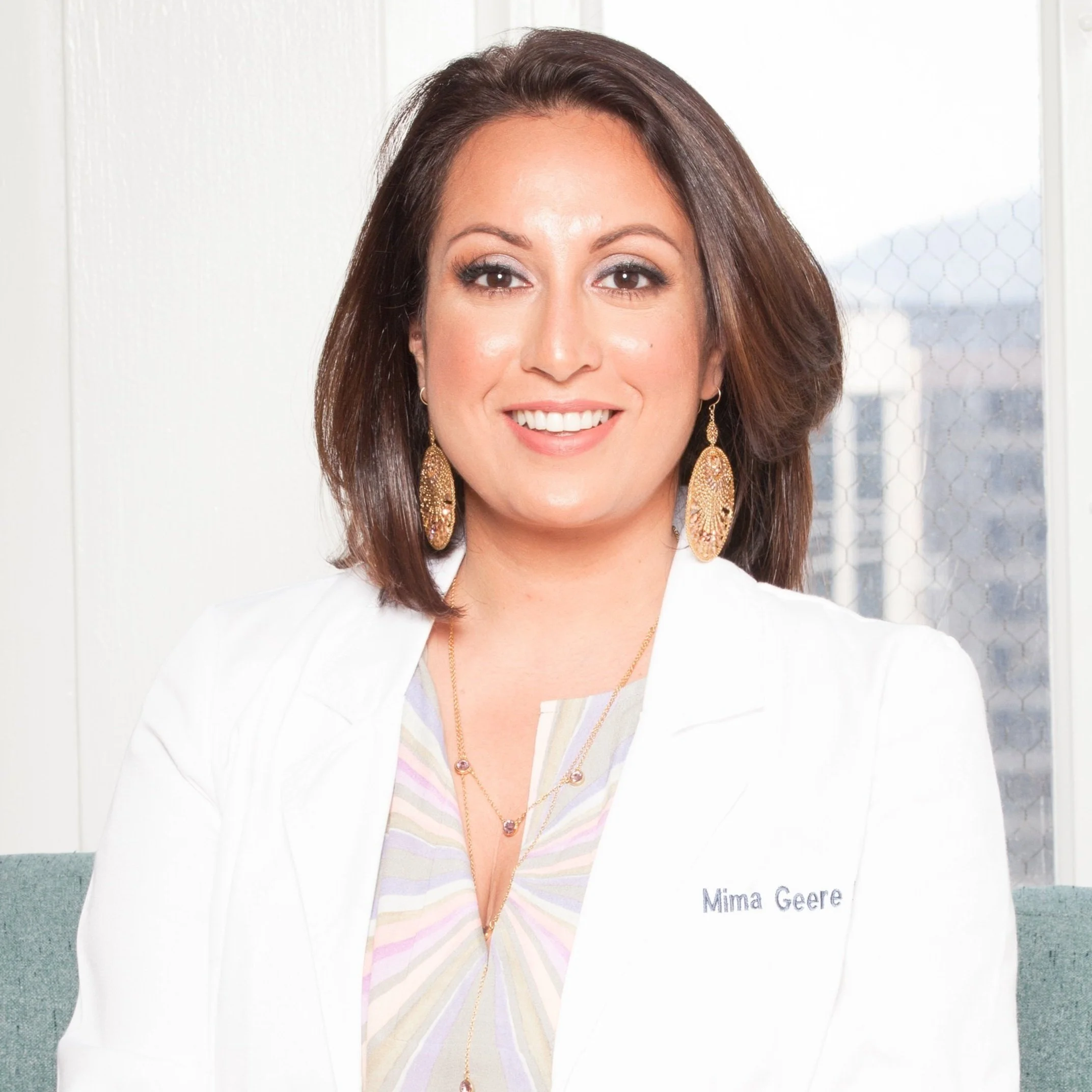
Mima Geere, MD, MS, IFMCP
Dr. Mima Geere is a trailblazer in systems-based longevity and integrative diagnostics, bringing over a decade of industry experience at the convergence of technology and precision medicine. With a strong foundation in startup environments and translational research, she combines rigorous scientific inquiry with functional medicine principles.
Her foundation in clinical pathology from UCSF and advanced postdoctoral training in clinical informatics and environmental toxicology informs her pioneering multi-omics frameworks — integrating genomics, metabolomics, and AI-driven modeling into personalized, ethical healthcare pathways. As Founder of Mimansa, she advances mind-body medicine and systems thinking alongside cutting-edge diagnostics.
Her vision centers on elevating truth as the core metric in medicine — through real-world data, digital twin simulation, and blockchain-enabled research collaboration — with a commitment to holistic longevity strategies that use science as the benchmark for advancing knowledge and clinical care.
Faculty Members
Our faculty roster is growing — announcements coming soon.
Faculty position open
Faculty position open
Faculty position open
Faculty position open
Think you're the right fit for a faculty position?
Get Involved →
Shaping the Future
of Precision Medicine
As precision medicine continues to evolve, genomics will play an increasingly central role in redefining how disease is understood, predicted, and treated at the molecular level.
The Genomics Department at ABOPM remains committed to advancing this field through scientific leadership, clinical innovation, and collaborative discovery. Together with our global community of physicians and researchers, we are helping shape the future of next-generation healthcare.
Insights Shaping
Precision Medicine
Explore ABOPM perspectives on genomics, multi-omics, systems thinking, clinical innovation, and the future of physician leadership in precision medicine.
Eight Advances in Precision Medicine: What Clinicians Need to Know
Explore eight advances in precision medicine, from rapid genomic sequencing and targeted cancer therapies to gene therapy, and discover what these breakthroughs mean for clinical practice. ...more
On the Frontier
October 22, 2026•10 min read
Digital Biomarkers and Wearable Health Data
Explore how digital biomarkers and wearable technologies are enabling continuous health monitoring, early disease detection, and more personalized approaches to precision medicine. ...more
On the Frontier
October 15, 2026•8 min read
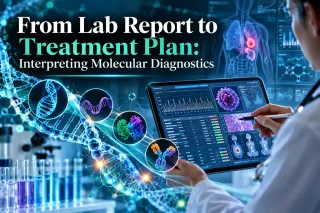
From Lab Report to Treatment Plan: Interpreting Molecular Diagnostics
Explore how clinicians interpret molecular diagnostic reports and translate genomic, transcriptomic, and proteomic findings into informed, personalized treatment decisions. ...more
Precision Medicine in Action
October 08, 2026•8 min read
Stay at the Forefront of Precision Medicine
Subscribe to receive ABOPM insights, research updates, and educational resources delivered directly to your inbox.
Advancing education, certification, and leadership to shape a genomics-driven, data-intelligent future of healthcare.
COMPANY
RESOURCES


© 2023-2025 American Board of Precision Medicine, Inc. All Rights Reserved.