Mapping Health Across
Longitudinal Systems
Time
Resolved Biology
Multi
Wave Cohorts
100%
Longitudinal Depth
Causal
Inference Ready
Lon·gi·tu·
di·nal
Sys·tems
/ ˌlänjəˈt(y)o͞odinəl ˈsistəmz / · noun
noun · temporal systems biologyThe repeated, time-series profiling of an individual's biological systems tracking multi-omic, physiological, and clinical variables across months and years to detect drift, inflection points, and early system-wide failures long before conventional disease thresholds are crossed.
Origin
From Latin longitudo (length, duration) + systema (an organized whole). Longitudinal systems medicine gained clinical traction through Michael Snyder's landmark 2012 integrative personal omics profiling study at Stanford, which tracked a single individual's molecular state across illness transitions demonstrating that continuous, high-resolution biological monitoring could reveal health trajectories invisible to single time-point snapshots.
The Longitudinal Systems Department at the American Board of Precision Medicine trains clinicians to move beyond the cross-sectional snapshot building the skills to design, interpret, and act on serial multi-omic monitoring programs that track how a patient's genome, transcriptome, proteome, metabolome, and microbiome evolve in concert with their clinical and environmental exposures over time.
From wearable biosensor integration and continuous glucose dynamics to epigenetic clock acceleration, immune aging trajectories, and clonal hematopoiesis surveillance, this department equips physicians to identify the earliest detectable signals of biological system failure intervening at the inflection point, not the crisis.
Health is not a static state - it is a trajectory. At ABOPM, Longitudinal Systems provides the temporal framework to track that trajectory with precision, transforming time-series biological data into a living map of each patient's health arc and the leverage points where timely intervention changes its course.
Time
Series Profiling
Early
Drift Detection
Multi
Omic Monitoring
Where Time-Series Biology Reveals
Each Patient's Health Trajectory
The Longitudinal Systems Department at ABOPM is redefining how physicians understand health over time training clinicians to move beyond the single time-point snapshot and design serial multi-omic monitoring programs that track how a patient's biological systems evolve across months and years, detecting drift, inflection points, and early system-wide failure long before conventional disease thresholds are crossed.
Advancing clinical application of serial genomic, transcriptomic, proteomic, and metabolomic profiling enabling physicians to track how a patient's molecular state evolves over time, identify early biological drift, and detect inflection points that signal impending system failure before clinical symptoms emerge.
Bridging continuous physiological data from wearable biosensors - HRV, continuous glucose monitoring, sleep architecture, and autonomic metrics with periodic multi-omic panels to build a comprehensive, temporally resolved picture of each patient's biological aging trajectory and resilience reserve.
Building the next generation of longitudinal precision physicians through rigorous board standards, temporal data interpretation training, and interdisciplinary collaboration across systems biology, epigenetic aging, clinical genomics, digital health, and preventive medicine.
"Health is not a static state - it is a trajectory. The Longitudinal Systems Department at ABOPM trains physicians to track that trajectory with precision, transforming time-series biological data into a living map of each patient's health arc and the leverage points where timely intervention changes its course."
American Board of Precision Medicine · Longitudinal Systems DepartmentTracking Biological Trajectories Over Time
to Intervene Before Disease Declares Itself
No single time-point tells the full story. Behind every diagnosis lies years of molecular drift — epigenetic clocks accelerating, immune trajectories shifting, metabolic reserves silently depleting, and biological systems approaching failure thresholds that a single blood draw was never designed to detect. Tracking the biological trajectory that is actually unfolding in each patient, rather than reacting to the disease it eventually produces, is not a futuristic aspiration — it is the temporal imperative of modern precision medicine.
Longitudinal systems medicine equips clinicians to move beyond cross-sectional snapshots and into time-resolved biological intelligence — applying serial multi-omic profiling, wearable biosensor integration, and epigenetic aging analysis to detect drift, identify inflection points, and intervene at the precise biological moment when prevention is still possible.
By mastering longitudinal systems medicine, clinicians gain the power to:
Why Longitudinal Systems Certification Is Non-Negotiable
Every patient has a biological trajectory. The question is, are you equipped to track it?
Longitudinal monitoring consistently outperforms reactive single time-point care delivering measurably better outcomes by detecting biological system failure in its early, reversible phases rather than at the clinical crisis point when the therapeutic window for meaningful intervention has already narrowed.
Continuous biosensor integration, epigenetic aging biomarkers, AI-driven trajectory modeling, and serial multi-omic monitoring platforms are transforming preventive medicine physicians board-certified in longitudinal systems will define the next generation of proactive, trajectory-based precision health.
Board certification in longitudinal systems marks you as the biological aging, healthspan, and temporal precision medicine authority - a physician equipped to lead longevity medicine programs, serial monitoring initiatives, and institutional infrastructure for continuous, trajectory-based patient care.
Longitudinal systems principles apply universally across preventive medicine, oncology, cardiology, neurology, and metabolic disease giving you a time-resolved biological framework to track each patient's health trajectory and identify early intervention windows across every specialty and disease domain.
Active research areas driving longitudinal systems medicine forward:
The longitudinal medicine revolution is not a future event — it is rewriting how health and disease are tracked today. Serial multi-omic profiling, epigenetic aging clocks, wearable biosensor integration, and clonal hematopoiesis surveillance are actively transforming how every chronic and age-related disease is detected, monitored, and intercepted at the biological trajectory and individual patient level.
The ABOPM Longitudinal Systems Department positions clinicians at the center of this transformation — equipping them with the temporal systems biology literacy, serial monitoring frameworks, and board-certified credentials to lead trajectory-based precision medicine across every disease domain and patient population.
Meet Our Leadership
Director of Longitudinal Systems
Director of Longitudinal Systems
We are actively seeking an exceptional leader to serve as Director of Longitudinal Systems. If you have deep expertise in serial multi-omic profiling, epigenetic aging, wearable biosensor integration, or temporal systems biology and are passionate about advancing the field, we want to hear from you.
Apply If You're Eligible →Faculty Members
Our faculty roster is growing — announcements coming soon.
Faculty position open
Faculty position open
Faculty position open
Faculty position open
Think you're the right fit for a faculty position?
Get Involved →
Shaping the Future
of Precision Medicine
As precision medicine continues to evolve, genomics will play an increasingly central role in redefining how disease is understood, predicted, and treated at the molecular level.
The Genomics Department at ABOPM remains committed to advancing this field through scientific leadership, clinical innovation, and collaborative discovery. Together with our global community of physicians and researchers, we are helping shape the future of next-generation healthcare.
Insights Shaping
Precision Medicine
Explore ABOPM perspectives on genomics, multi-omics, systems thinking, clinical innovation, and the future of physician leadership in precision medicine.
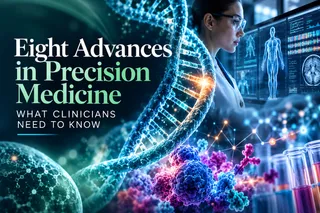
Eight Advances in Precision Medicine: What Clinicians Need to Know
Explore eight advances in precision medicine, from rapid genomic sequencing and targeted cancer therapies to gene therapy, and discover what these breakthroughs mean for clinical practice. ...more
On the Frontier
October 22, 2026•10 min read
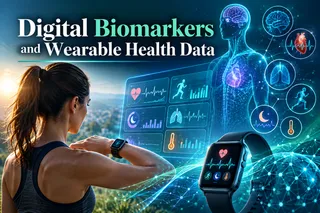
Digital Biomarkers and Wearable Health Data
Explore how digital biomarkers and wearable technologies are enabling continuous health monitoring, early disease detection, and more personalized approaches to precision medicine. ...more
On the Frontier
October 15, 2026•8 min read
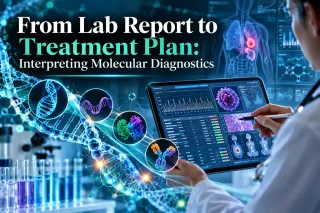
From Lab Report to Treatment Plan: Interpreting Molecular Diagnostics
Explore how clinicians interpret molecular diagnostic reports and translate genomic, transcriptomic, and proteomic findings into informed, personalized treatment decisions. ...more
Precision Medicine in Action
October 08, 2026•8 min read
Stay at the Forefront of Precision Medicine
Subscribe to receive ABOPM insights, research updates, and educational resources delivered directly to your inbox.
Advancing education, certification, and leadership to shape a genomics-driven, data-intelligent future of healthcare.
COMPANY
RESOURCES


© 2023-2025 American Board of Precision Medicine, Inc. All Rights Reserved.