Transforming Care Through
AI & Clinical Modeling
AI
Driven Insights
Real
World Validation
100%
Patient Centered
Board
Certified Standard
AI &
Clin·i·cal
Mod·el·ing
/ ˌeɪˈaɪ ˈklinəkəl ˈmädəliNG / · noun
noun · computational medicineThe application of machine learning, deep learning, and predictive computational models to clinical and multi-omic data enabling pattern recognition, risk stratification, and treatment response prediction at a scale and resolution beyond the reach of conventional clinical reasoning.
Origin
From Latin artificialis intelligentia (artificial intelligence) + clinicus (of the sickbed) + modellus (a small measure). Clinical AI modeling accelerated in the 2010s as deep neural networks surpassed human performance in medical image interpretation, and large-scale EHR datasets enabled the training of predictive models for sepsis, readmission, and disease progression ushering in a new era of data-driven, algorithmically augmented medicine.
The AI and Clinical Modeling Department at the American Board of Precision Medicine trains clinicians to understand, evaluate, and apply artificial intelligence tools in real-world practice covering supervised and unsupervised learning, natural language processing of clinical notes, convolutional neural networks in diagnostics, and the construction of patient-level predictive models from structured and unstructured health data.
From polygenic risk score integration and multi-omic feature selection to survival modeling, digital twin simulation, and AI-assisted drug response prediction, this department equips physicians with the critical literacy to distinguish validated clinical AI from algorithmic noise and to deploy these tools responsibly within precision medicine workflows.
Medicine generates more data than any clinician can process unaided. At ABOPM, AI and Clinical Modeling provides the computational framework to transform that data into decision-grade intelligence — turning the full complexity of a patient's biology into actionable, individualized predictions that drive earlier intervention and better outcomes.
AI
Augmented Diagnosis
Real
World Model Validation
Predict
Before Onset
Where Computational Intelligence Meets
Individualized Patient Prediction
The AI and Clinical Modeling Department at ABOPM is redefining how physicians harness data training clinicians to evaluate, apply, and critically interpret artificial intelligence tools across precision medicine workflows, integrating machine learning, predictive modeling, and multi-omic feature analysis into clinical strategies that deliver decision-grade intelligence for every individual patient.
Advancing clinical application of supervised and unsupervised learning, neural networks, survival modeling, and natural language processing of clinical notes enabling physicians to build, validate, and deploy patient-level predictive models from structured and unstructured health data across the full precision medicine workflow.
Bridging genomic, transcriptomic, proteomic, and clinical data through AI-driven feature selection and multi-modal fusion developing board-certified frameworks for polygenic risk score integration, digital twin simulation, and AI-assisted drug response prediction grounded in each patient's molecular biology.
Building the next generation of AI-literate precision physicians through rigorous board standards, critical model evaluation training, and interdisciplinary collaboration across computational medicine, clinical informatics, biostatistics, health data science, and translational AI research.
"Medicine generates more data than any clinician can process unaided. The AI and Clinical Modeling Department at ABOPM trains physicians to harness that data with rigor distinguishing validated clinical AI from algorithmic noise, and deploying predictive intelligence that is uniquely calibrated to each patient."
American Board of Precision Medicine · AI & Clinical Modeling DepartmentHarnessing Computational Intelligence
to Deliver Decision-Grade Patient Prediction
Medicine now generates more data per patient than any clinician can process unaided. Behind every EHR, every multi-omic panel, and every wearable data stream lies a signal — patterns of risk, trajectories of disease, and predictions of treatment response that conventional clinical reasoning was never scaled to detect. Applying artificial intelligence and predictive modeling to transform that data into decision-grade clinical intelligence, for every individual patient, is not an emerging aspiration — it is the computational obligation of modern precision medicine.
AI and clinical modeling equips clinicians to move beyond intuition-based pattern recognition and into algorithmically augmented decision-making — applying machine learning, natural language processing, survival modeling, and multi-omic feature integration to predict risk, stratify patients, and personalize treatment with a resolution no unaided clinical mind can match.
By mastering AI and clinical modeling, clinicians gain the power to:
Why AI & Clinical Modeling Certification Is Non-Negotiable
Every patient generates data. The question is, are you equipped to make it predict?
AI-augmented clinical strategies consistently outperform intuition-driven care in early detection, risk stratification, and treatment selection delivering measurably better outcomes by acting on predictive intelligence before disease becomes irreversible, not after it declares itself clinically.
Large language models, foundation models trained on clinical data, AI-guided imaging interpretation, and real-time predictive monitoring are already transforming medicine physicians board-certified in AI and clinical modeling will define the next generation of algorithmically augmented precision care.
Board certification in AI and clinical modeling marks you as the computational medicine and clinical AI authority - a physician equipped to lead AI governance committees, precision medicine data programs, and institutional initiatives that responsibly deploy predictive intelligence at the point of care.
AI and clinical modeling principles apply universally across oncology, cardiology, neurology, infectious disease, and preventive medicine giving you a disease-agnostic computational framework to extract predictive intelligence from any clinical dataset and deliver individualized, data-driven care across every patient population.
Active research areas driving AI and clinical modeling forward:
The clinical AI revolution is not a future event — it is rewriting how patient data is transformed into clinical decisions today. Machine learning prediction models, NLP-driven clinical intelligence, multi-modal omic AI, and digital twin simulation are actively transforming how every complex disease is risk-stratified, monitored, and treated at the computational and individual patient level.
The ABOPM AI and Clinical Modeling Department positions clinicians at the center of this transformation — equipping them with the computational medicine literacy, AI evaluation frameworks, and board-certified credentials to lead algorithmically augmented precision medicine across every disease domain and patient population.
Meet Our Leadership
Director of AI in Precision Medicine
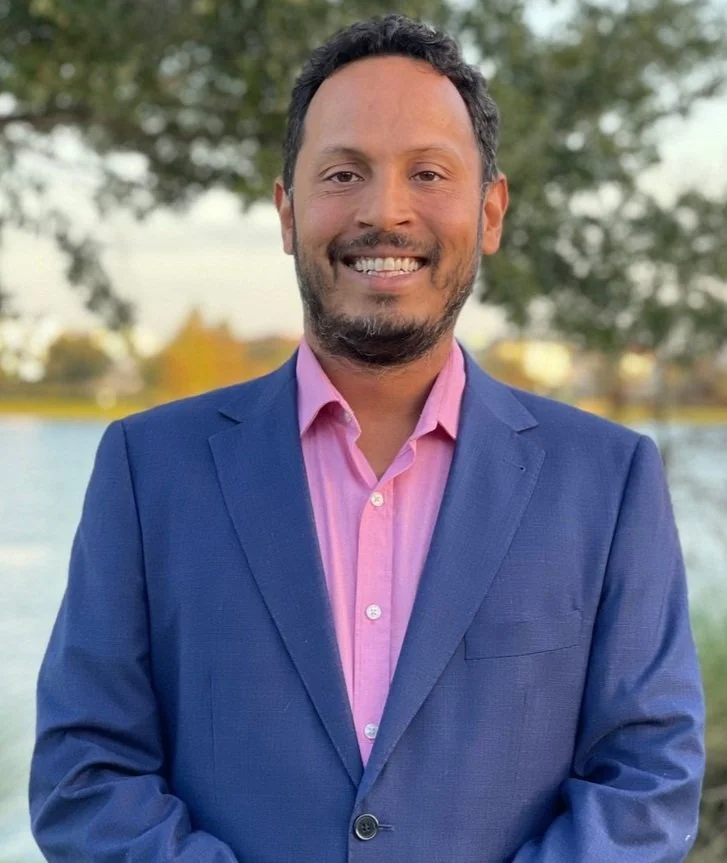
Dexter Hadley, MD, PhD
Dr. Hadley is a physician-scientist and AI researcher with deep expertise in genomics, computational biology, and clinical AI innovation. He earned his MD and PhD in Genomics and Computational Biology from the University of Pennsylvania and completed a Clinical Pathology residency at Stanford University.
He developed an Investigational New Drug approved for an ADHD therapeutic and led NIH-funded projects including STARGEO, CrADLe digital curation, and MammoChat. As Director of AI in Precision Medicine at ABOPM, he focuses on clinical decision support and biomarker discovery. He also serves as Chief of AI at UCF College of Medicine, collaborating with AdventHealth and the Orlando VA to implement AI solutions in healthcare — with a particular emphasis on fair AI applications, bias-correcting algorithms, and fairness-aware datasets to improve accessibility and inclusivity in precision medicine.
Faculty Members
Our faculty roster is growing — announcements coming soon.
Faculty position open
Faculty position open
Faculty position open
Faculty position open
Think you're the right fit for a faculty position?
Get Involved →
Shaping the Future
of Precision Medicine
As precision medicine continues to evolve, genomics will play an increasingly central role in redefining how disease is understood, predicted, and treated at the molecular level.
The Genomics Department at ABOPM remains committed to advancing this field through scientific leadership, clinical innovation, and collaborative discovery. Together with our global community of physicians and researchers, we are helping shape the future of next-generation healthcare.
Insights Shaping
Precision Medicine
Explore ABOPM perspectives on genomics, multi-omics, systems thinking, clinical innovation, and the future of physician leadership in precision medicine.
Eight Advances in Precision Medicine: What Clinicians Need to Know
Explore eight advances in precision medicine, from rapid genomic sequencing and targeted cancer therapies to gene therapy, and discover what these breakthroughs mean for clinical practice. ...more
On the Frontier
October 22, 2026•10 min read
Digital Biomarkers and Wearable Health Data
Explore how digital biomarkers and wearable technologies are enabling continuous health monitoring, early disease detection, and more personalized approaches to precision medicine. ...more
On the Frontier
October 15, 2026•8 min read
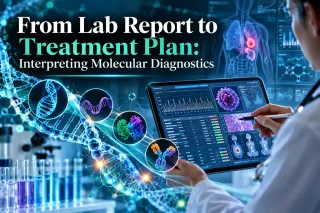
From Lab Report to Treatment Plan: Interpreting Molecular Diagnostics
Explore how clinicians interpret molecular diagnostic reports and translate genomic, transcriptomic, and proteomic findings into informed, personalized treatment decisions. ...more
Precision Medicine in Action
October 08, 2026•8 min read
Stay at the Forefront of Precision Medicine
Subscribe to receive ABOPM insights, research updates, and educational resources delivered directly to your inbox.
Advancing education, certification, and leadership to shape a genomics-driven, data-intelligent future of healthcare.
COMPANY
RESOURCES


© 2023-2025 American Board of Precision Medicine, Inc. All Rights Reserved.