
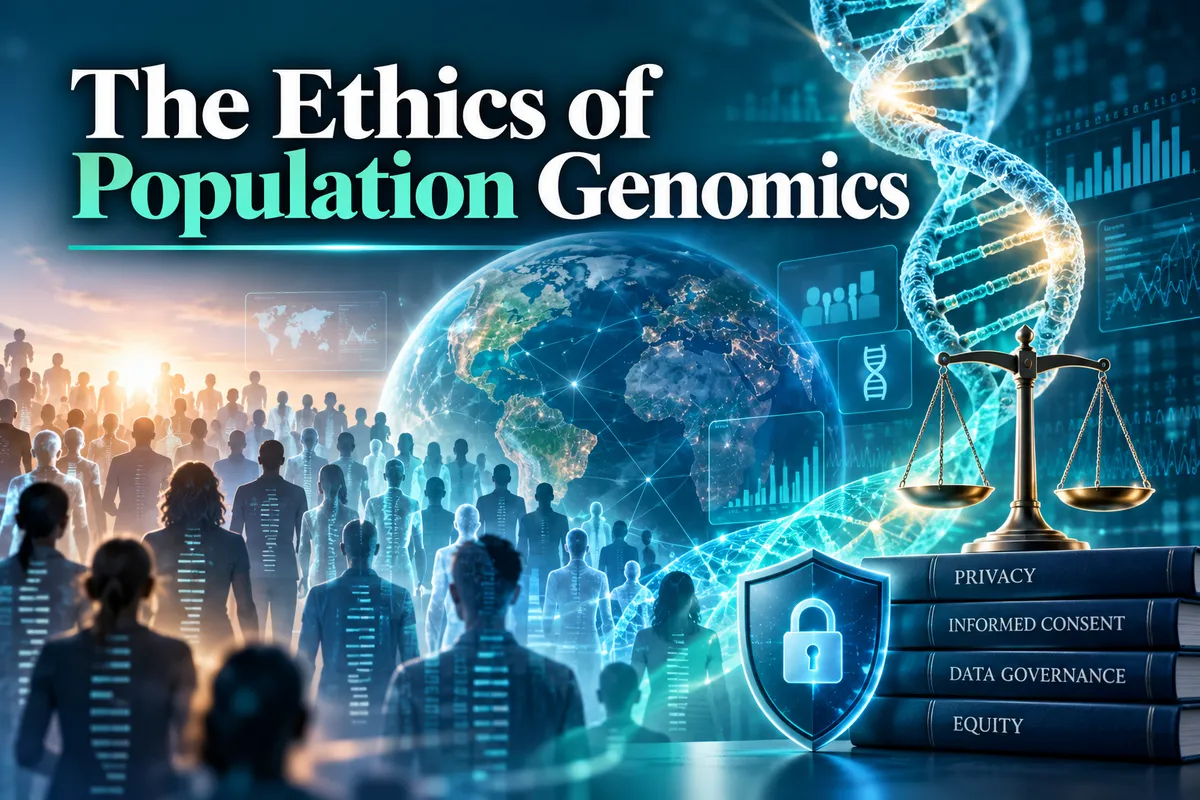
The Ethics of Population Genomics
Introduction
Advances in genomic sequencing technologies have enabled large-scale studies examining genetic variation across entire populations. Population genomics the study of genetic diversity within and between populations has become a central component of modern biomedical research. Large genomic datasets have contributed to discoveries related to disease susceptibility, therapeutic targets, and human biological diversity. These initiatives also form the scientific foundation of precision medicine, which seeks to tailor prevention and treatment strategies to individual biological characteristics.
Global genomic projects such as national biobanks and multinational sequencing initiatives are generating datasets that include genetic, clinical, and environmental information from hundreds of thousands of participants. These efforts have accelerated scientific discovery and expanded opportunities for disease risk prediction and personalized treatment.
However, the growth of population genomics also raises important ethical, legal, and social considerations. Genetic data contain highly sensitive information that can reveal details about an individual’s ancestry, health risks, and familial relationships. As genomic databases expand and data-sharing initiatives increase, concerns regarding privacy, informed consent, and data governance have become central topics in biomedical ethics.
Balancing the benefits of genomic research with the protection of participant rights is therefore a critical challenge for healthcare systems, policymakers, and researchers. Studies published in Nature Medicine emphasize that ethical frameworks must evolve alongside technological advances to ensure that genomic research is conducted responsibly and equitably.
This article examines the ethical challenges associated with population genomics, explores key issues related to privacy and consent, and discusses policy considerations necessary to support responsible genomic innovation.
The Growth of Population Genomics
Population genomics involves analyzing genetic variation across large groups of individuals to understand how genes influence health, disease, and human diversity. These studies rely on the collection of genomic data from many participants and often involve linking genetic information with clinical records, environmental exposures, and demographic characteristics.
The expansion of genomic sequencing has enabled several types of population-level studies, including:
National biobank initiatives
International genomic collaborations
Disease-specific sequencing programs
Longitudinal population health studies
These initiatives have significantly improved understanding of genetic contributions to complex diseases such as cardiovascular disease, cancer, diabetes, and autoimmune disorders. By examining genetic variation across large populations, researchers can identify genetic variants associated with disease risk and investigate how these variants interact with environmental and lifestyle factors.
Despite these scientific benefits, the large-scale collection and storage of genomic data introduces ethical challenges that require careful governance.
Ethical Considerations in Genomic Research
Ethical issues in population genomics arise primarily from the sensitive nature of genetic data and the scale at which genomic information is collected and shared. Unlike many other forms of medical data, genetic information is inherently identifiable and can reveal information not only about an individual but also about their biological relatives.
Several ethical principles are commonly used to guide genomic research:
Respect for persons, which includes protecting autonomy and ensuring informed consent
Beneficence, which requires maximizing potential benefits while minimizing harm
Justice, which involves ensuring equitable access to research benefits and avoiding exploitation
Applying these principles to population genomics requires addressing a number of practical challenges related to data protection, participant rights, and responsible data sharing.
Key Ethical Issues
Privacy and Confidentiality
One of the most widely discussed ethical concerns in population genomics involves privacy and confidentiality. Genetic information is uniquely identifying; even when personal identifiers such as names or addresses are removed, genomic data may still be re-identifiable through comparison with other datasets.
Advances in data analytics and increasing availability of public genetic databases have made it possible in some cases to re-identify individuals using anonymized genomic data. This raises concerns about potential misuse of genetic information.
Privacy risks may include:
Unauthorized access to genetic data
Re-identification of participants from anonymized datasets
Potential misuse of genetic information by third parties
To address these concerns, genomic research initiatives often implement strict data security measures and controlled-access databases. Researchers accessing genomic data must typically meet specific criteria and adhere to data-use agreements designed to protect participant privacy.
Informed Consent
Informed consent represents another central ethical challenge in population genomics. Participants must understand how their genomic data will be used, stored, and shared before agreeing to participate in research studies.
However, obtaining fully informed consent can be difficult in large-scale genomic studies because future research uses of genomic data may not be fully predictable at the time of data collection. Participants may consent to one type of study, but their genomic data could later be used in unrelated research.
To address this issue, several consent models have been proposed:
Broad consent, which allows genomic data to be used in a range of future studies
Dynamic consent, which enables participants to update their consent preferences over time through digital platforms
Tiered consent, which allows participants to specify categories of research for which their data may be used
Each approach has advantages and limitations, and selecting an appropriate consent model requires balancing research flexibility with participant autonomy.
Data Ownership and Governance
Questions surrounding data ownership represent another complex ethical issue. Participants contribute their genomic information to research databases, but determining who ultimately controls or owns this data can be challenging.
Possible stakeholders include:
Individual participants
Research institutions
Government agencies
Commercial partners involved in genomic research
In many genomic research programs, participants retain certain rights regarding how their data are used, but institutions often manage the storage and analysis of the data. Ensuring transparency about how genomic data are governed is essential for maintaining public trust in genomic research initiatives.
Balancing Innovation and Protection
Population genomics offers substantial benefits for medical research and public health. Large genomic datasets have enabled researchers to identify genetic variants associated with disease, develop polygenic risk models, and discover new therapeutic targets.
At the same time, protecting participant rights and maintaining public trust are essential for the continued success of genomic research programs. Without adequate safeguards, concerns about privacy or misuse of genetic data may discourage individuals from participating in genomic studies.
Balancing innovation with participant protection requires several key strategies:
Developing robust data security and governance frameworks
Ensuring transparency about how genomic data are used
Engaging communities in discussions about genomic research
Establishing clear ethical guidelines for data sharing
Public engagement is particularly important because genomic research often involves long-term data collection and may affect entire communities or populations.
Policy Implications
As population genomics initiatives expand globally, policymakers face the challenge of developing regulatory frameworks that support scientific progress while protecting participant rights.
Several policy areas are particularly relevant to genomic research:
Data Protection Laws
Regulations governing personal data protection play an important role in genomic research. Policies such as the General Data Protection Regulation (GDPR) in the European Union establish requirements for data privacy, consent, and data security.
These regulations influence how genomic data can be collected, stored, and shared across international borders.
Anti-Discrimination Protections
Another important policy consideration involves preventing genetic discrimination. Concerns have been raised that genetic information could potentially be used by employers or insurance providers to discriminate against individuals with elevated disease risk.
Legislation such as the Genetic Information Nondiscrimination Act (GINA) in the United States seeks to address these concerns by restricting the use of genetic information in employment and health insurance decisions.
International Collaboration
Because genomic research often involves international collaborations, harmonizing ethical and regulatory standards across countries is an important challenge. Organizations such as the Global Alliance for Genomics and Health (GA4GH) work to develop frameworks that support responsible data sharing while respecting national legal and ethical standards.
Future Directions
The ethical landscape of population genomics will continue to evolve as new technologies emerge and genomic datasets expand.
Several trends are likely to influence future ethical discussions:
Integration of genomic data with electronic health records and digital health data
Increasing use of artificial intelligence to analyze genomic datasets
Expansion of direct-to-consumer genetic testing
Greater participation of diverse populations in genomic research
Ensuring that ethical frameworks keep pace with technological advances will be essential for maintaining public trust and maximizing the benefits of genomic research.
Future efforts will likely focus on developing more flexible consent models, strengthening data governance systems, and promoting inclusive participation in genomic research initiatives.
Conclusion
Population genomics has become a cornerstone of modern biomedical research and precision medicine. Large-scale genomic datasets have enabled significant advances in understanding the genetic basis of disease and have opened new opportunities for personalized healthcare.
However, the collection and use of genomic data also raise important ethical considerations related to privacy, informed consent, and data governance. Addressing these challenges requires careful balance between scientific innovation and the protection of participant rights.
For clinicians, researchers, and healthcare leaders, understanding the ethical dimensions of population genomics is essential for ensuring responsible use of genomic technologies. Transparent governance, strong privacy protections, and meaningful public engagement will be critical for sustaining trust and enabling the continued growth of genomic research.
References
Gymrek M, et al. Identifying personal genomes by surname inference. Nature Medicine. https://www.nature.com/articles/s41591-020-0850-0
Knoppers BM. Framework for responsible sharing of genomic and health-related data. Nature.
Torkamani A, Wineinger NE, Topol EJ. The personal and clinical utility of polygenic risk scores. Nature Reviews Genetics.
Global Alliance for Genomics and Health. A federated ecosystem for sharing genomic, clinical data. Science.
Collins FS, Varmus H. A new initiative on precision medicine. New England Journal of Medicine.