Preventing Disease Through
Precision Preventive Medicine
Root
Cause Medicine
Life
Course Approach
100%
Individualized Care
Evidence
Based Prevention
Pre·ci·sion
Pre·ven·tive
Med·i·cine
/ ˈpreSHən priˈventiv ˈmedəsən / · noun
noun · proactive clinical medicineThe individualized application of multi-omic risk profiling, early biomarker surveillance, and genotype-guided lifestyle and therapeutic intervention replacing population-average screening protocols with a molecularly precise, patient-specific strategy to intercept disease before it becomes clinically manifest.
Origin
From Latin praecisio (exactness) + praevenire (to come before) + medicina (the healing art). The precision preventive medicine paradigm crystallized in the 2010s as the convergence of whole-genome sequencing, polygenic risk scoring, and wearable sensor data made it possible to stratify individuals not by age and family history alone, but by their unique molecular architecture enabling targeted prevention decades before conventional risk factors emerge.
The Precision Preventive Medicine Department at the American Board of Precision Medicine trains clinicians to redefine what prevention means moving beyond annual labs and generic lifestyle counseling to individualized risk architectures built from polygenic scores, epigenetic age acceleration, inflammatory burden, metabolic reserve, and microbiome composition, each calibrated to the patient in front of them.
From carrier screening and pharmacogenomic pre-testing to cancer interception protocols, cardiovascular inflammasome profiling, and senescence burden quantification, this department equips physicians to detect the earliest molecular signatures of future disease and to deploy targeted, evidence-based interventions at the precise biological moment when they carry the greatest impact.
Disease does not begin at diagnosis it begins years or decades earlier, as molecular systems silently drift toward failure. At ABOPM, Precision Preventive Medicine provides the clinical and biological framework to detect that drift early, intervene precisely, and rewrite each patient's health trajectory before the first symptom ever appears.
80%
Chronic Disease Preventable
Early
Intercept Before Onset
N=1
Individual Risk Profiling
Where Molecular Risk Profiling Enables
Intervention Before Disease Begins
The Precision Preventive Medicine Department at ABOPM is redefining what prevention means training physicians to replace population-average screening with individualized risk architectures built from polygenic scores, epigenetic aging, inflammatory burden, and metabolic reserve, deploying genotype-guided interventions at the precise biological moment when they carry the greatest impact for each patient.
Advancing clinical application of polygenic risk scoring, epigenetic clock acceleration, inflammatory biomarker panels, and metabolic reserve assessment enabling physicians to build a molecularly precise, patient-specific risk portrait that goes far beyond age, family history, and population-average screening protocols.
Bridging genomic risk stratification with targeted prevention developing board-certified frameworks for cancer interception, cardiovascular inflammasome profiling, senescence burden quantification, and pharmacogenomic pre-testing that deploy evidence-based interventions years before conventional risk factors emerge.
Building the next generation of precision preventive physicians through rigorous board standards, molecular risk literacy training, and interdisciplinary collaboration across clinical genomics, epigenetics, metabolic medicine, environmental health, and population health science.
"Disease does not begin at diagnosis - it begins years or decades earlier, as molecular systems silently drift toward failure. The Precision Preventive Medicine Department at ABOPM trains physicians to detect that drift early, intervene precisely, and rewrite each patient's health trajectory before the first symptom ever appears."
American Board of Precision Medicine · Precision Preventive Medicine DepartmentIntercepting Disease at Its Molecular Origin
to Deliver Prevention That Actually Prevents
No disease begins at diagnosis. Behind every first cardiovascular event, every new cancer diagnosis, and every chronic disease onset lies years — sometimes decades — of silent molecular accumulation: polygenic risk compounding, epigenetic programs drifting, inflammatory cascades kindling, and metabolic reserves depleting in patterns that population-average screening protocols were never designed to detect. Intercepting the molecular risk that is actually present in each patient, before it crosses the threshold into irreversible disease, is not an aspirational goal — it is the preventive obligation of modern precision medicine.
Precision preventive medicine equips clinicians to move beyond age- and family history–based screening and into molecularly individualized risk architectures — applying polygenic risk scoring, epigenetic aging analysis, inflammatory burden quantification, and metabolic reserve assessment to build patient-specific prevention strategies deployed at the precise biological moment when they carry the greatest impact.
By mastering precision preventive medicine, clinicians gain the power to:
Why Precision Preventive Medicine Certification Is Non-Negotiable
Every patient carries molecular risk. The question is, are you equipped to find it before it finds them?
Molecularly guided prevention consistently outperforms reactive disease management delivering measurably better outcomes by identifying and addressing biological risk in its early, modifiable phases rather than at the point of clinical diagnosis when the disease has already declared itself and the therapeutic window for true prevention has closed.
Polygenic risk scores, multi-cancer early detection, epigenetic clocks, and AI-driven risk stratification platforms are transforming preventive medicine - physicians board-certified in precision prevention will define the next standard of molecularly individualized, proactive patient care.
Board certification in precision preventive medicine marks you as the molecular risk assessment and disease interception authority - a physician equipped to lead genomic medicine clinics, precision prevention programs, and institutional initiatives that fundamentally shift care from reactive treatment to proactive biological risk management.
Precision preventive medicine principles apply universally across cardiovascular, oncologic, metabolic, neurological, and autoimmune disease giving you a disease-agnostic molecular risk framework to intercept the earliest stages of biological dysfunction across every patient population you serve.
Active research areas driving precision preventive medicine forward:
The precision prevention revolution is not a future event — it is rewriting how disease risk is identified and intercepted today. Polygenic risk scoring, epigenetic aging biomarkers, multi-cancer early detection, inflammaging quantification, and pharmacogenomic pre-testing are actively transforming how every chronic disease is risk-stratified, monitored, and intercepted at the molecular and individual patient level — before the first symptom appears.
The ABOPM Precision Preventive Medicine Department positions clinicians at the center of this transformation — equipping them with the molecular risk literacy, interception frameworks, and board-certified credentials to lead proactive, genomically individualized prevention programs across every disease domain and patient population.
Meet Our Leadership
Director of Precision Preventive Medicine
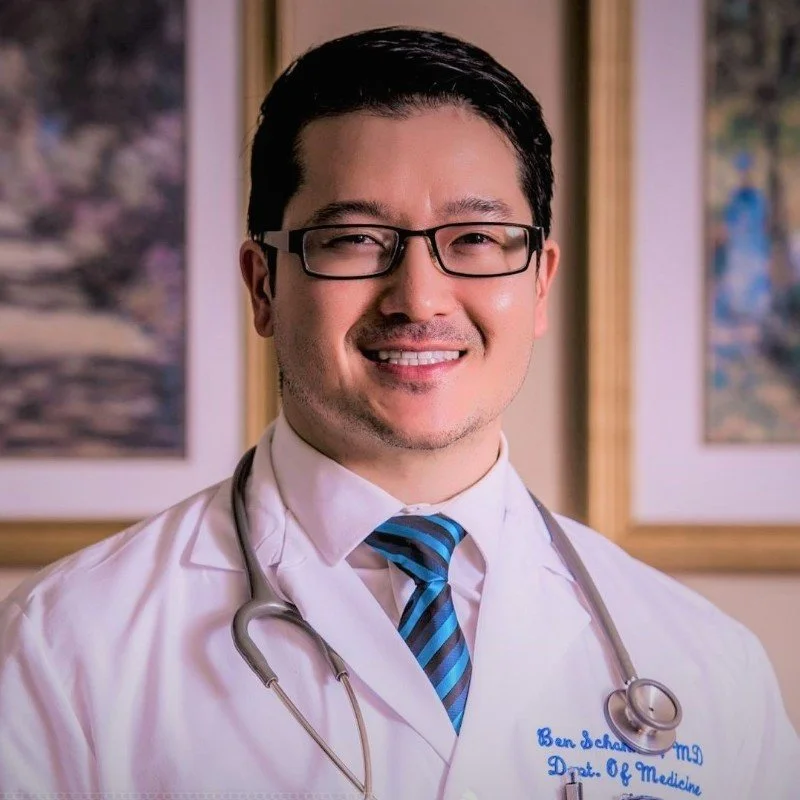
Benjamin Schanker, MD, MBA, MPH
Dr. Schanker is a Preventive Medicine specialist at Stanford University, where he serves as Clinical Assistant Professor in the Division of Primary Care and Population Health. He holds an MD from Harvard Medical School, an MPH from Johns Hopkins Bloomberg School of Public Health, and an MBA from Oxford Saïd Business School.
After preliminary Internal Medicine at Yale and residency and fellowship training at UCSF, he practiced community health in California's Central Valley with a focus on neuromusculoskeletal and orthopedic spine and sports injuries. He brings over a decade of leadership in systems quality improvement, having served as an Expert Consultant for the World Health Organization and on leadership teams of the American Medical Association Foundation and Massachusetts Medical Society.
Faculty Members
Our faculty roster is growing — announcements coming soon.
Faculty position open
Faculty position open
Faculty position open
Faculty position open
Think you're the right fit for a faculty position?
Get Involved →
Shaping the Future
of Precision Medicine
As precision medicine continues to evolve, genomics will play an increasingly central role in redefining how disease is understood, predicted, and treated at the molecular level.
The Genomics Department at ABOPM remains committed to advancing this field through scientific leadership, clinical innovation, and collaborative discovery. Together with our global community of physicians and researchers, we are helping shape the future of next-generation healthcare.
Insights Shaping
Precision Medicine
Explore ABOPM perspectives on genomics, multi-omics, systems thinking, clinical innovation, and the future of physician leadership in precision medicine.
Eight Advances in Precision Medicine: What Clinicians Need to Know
Explore eight advances in precision medicine, from rapid genomic sequencing and targeted cancer therapies to gene therapy, and discover what these breakthroughs mean for clinical practice. ...more
On the Frontier
October 22, 2026•10 min read
Digital Biomarkers and Wearable Health Data
Explore how digital biomarkers and wearable technologies are enabling continuous health monitoring, early disease detection, and more personalized approaches to precision medicine. ...more
On the Frontier
October 15, 2026•8 min read
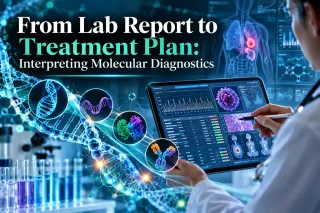
From Lab Report to Treatment Plan: Interpreting Molecular Diagnostics
Explore how clinicians interpret molecular diagnostic reports and translate genomic, transcriptomic, and proteomic findings into informed, personalized treatment decisions. ...more
Precision Medicine in Action
October 08, 2026•8 min read
Stay at the Forefront of Precision Medicine
Subscribe to receive ABOPM insights, research updates, and educational resources delivered directly to your inbox.
Advancing education, certification, and leadership to shape a genomics-driven, data-intelligent future of healthcare.
COMPANY
RESOURCES


© 2023-2025 American Board of Precision Medicine, Inc. All Rights Reserved.