Transforming Digestive Care Through
Precision Gastroenterology
Microbiome
Precision Restored
GI-First
Centered Care
100%
Targeted Protocols
Evidence
Based Outcomes
Pre·ci·sion
Gas·tro·en·
ter·ol·o·gy
/ ˈpreSHən ˌɡastrōənˌterˈäləjē / · noun
noun · precision digestive medicineThe integration of genomic, microbiome, and metabolic profiling with advanced gastrointestinal diagnostics - moving beyond symptom-based treatment to the molecular and cellular root causes driving digestive dysfunction, mucosal inflammation, and gut-systemic disease in each individual patient.
Origin
From Greek gaster (stomach) + enteron (intestine) + -logia (study of). Precision gastroenterology emerged as metagenomic sequencing, single-cell transcriptomics of intestinal epithelium, and spatial proteomics of the gut mucosa revealed that clinically similar presentations of IBD, IBS, and metabolic GI disease harbor molecularly distinct etiologies - requiring individualized diagnostic and therapeutic strategies beyond conventional endoscopic and pharmacologic protocols.
The Precision Gastroenterology Department at the American Board of Precision Medicine trains clinicians to look beyond standard endoscopy and stool panels - integrating microbiome composition analysis, intestinal permeability profiling, mucosal immune phenotyping, and gut-brain axis assessment into a molecularly complete picture of each patient's digestive biology and treatment response potential.
From IBD endotype stratification and SIBO-motility axis dysfunction to mitochondrial enterocyte failure, epigenetic regulation of mucosal immunity, and pharmacogenomic optimization of biologic therapy, this department equips physicians with the molecular and metabolic fluency to identify the upstream biological drivers of GI disease - and to design individualized interventions that address root causes rather than symptoms.
Digestive health is not simply a function of diet and anatomy - it is the downstream expression of a patient's entire microbial, immune, and genomic architecture. At ABOPM, Precision Gastroenterology provides the precision framework to decode that architecture for every patient, transforming fragmented lab values into a coherent, actionable map of individual gut health potential.
N=1
Microbiome Profiling
Root
Cause GI Care
Full
Gut Optimization
Where Digestive Precision Transforms
Gut Health and GI Medicine
The Precision Gastroenterology Department at ABOPM is redefining digestive care — training physicians to move beyond standard endoscopy and symptom-based protocols, integrating microbiome composition analysis, intestinal permeability profiling, mucosal immune phenotyping, and gut-brain axis assessment into a molecularly complete picture of each patient's unique digestive biology.
Advancing clinical application of metagenomic microbiome sequencing, intestinal epithelial transcriptomics, IBD endotype stratification, SIBO-motility axis evaluation, and pharmacogenomic optimization of biologic therapy — enabling physicians to build a molecularly precise GI portrait for every patient and guide individualized treatment from first consultation.
Bridging molecular gastroenterology and systemic outcomes — developing board-certified frameworks for mucosal immune phenotyping, intestinal permeability assessment, mitochondrial enterocyte dysfunction, epigenetic regulation of mucosal immunity, and gut-brain axis analysis to identify and address the upstream molecular drivers of digestive disease and systemic GI-related dysfunction.
Building the next generation of precision gastroenterologists through rigorous board standards, molecular GI literacy training, and interdisciplinary collaboration across clinical genomics, mucosal immunology, metabolic medicine, the microbiome sciences, and translational digestive health research.
"Digestive health is not simply a function of diet and anatomy — it is the downstream expression of a patient's entire microbial, immune, and genomic architecture. The Precision Gastroenterology Department at ABOPM trains physicians to decode that architecture for every patient, transforming fragmented lab values into a coherent, actionable map of individual gut health potential."
American Board of Precision Medicine · Precision Gastroenterology DepartmentDecoding Each Patient's Digestive Biology
to Deliver Precision Gut and GI Care
No two patients develop IBD, IBS, or metabolic GI disease for the same molecular reason. Behind every unexplained digestive complaint, every refractory Crohn's flare, and every failed biologic lies a specific biological substrate — microbial dysbiosis patterns, mucosal immune phenotypes, intestinal permeability signatures, and gut-brain axis dysregulations that population-based treatment algorithms and standard endoscopy were never designed to resolve. Identifying the molecular architecture of each patient's digestive biology — and matching intervention to that architecture — is not a specialized aspiration; it is the precision obligation of modern gastroenterology.
Precision gastroenterology equips clinicians to move beyond standard colonoscopy and empirical pharmacotherapy and into molecularly stratified digestive care — applying metagenomic microbiome profiling, mucosal transcriptomics, intestinal permeability mapping, and gut-brain axis assessment to identify the upstream biological drivers of GI disease and design individualized intervention strategies from the first clinical encounter.
By mastering precision gastroenterology, clinicians gain the power to:
Why Precision Gastroenterology Certification Is Non-Negotiable
Every patient has a digestive biology. The question is, are you equipped to decode it?
Molecularly stratified GI care consistently outperforms empirical pharmacotherapy — delivering measurably better remission rates, fewer biologic failures, and reduced treatment burden by identifying and addressing the specific molecular drivers of each patient's digestive disease from the first clinical decision rather than discovering them through costly, damaging trial and error.
Metagenomic microbiome analysis, mucosal spatial transcriptomics, gut-brain neurochemical profiling, AI-guided biologic optimization, and intestinal organoid drug testing are transforming GI medicine — physicians board-certified in precision gastroenterology will define the next generation of molecularly individualized digestive care.
Board certification in precision gastroenterology marks you as the microbiome and molecular GI medicine authority — a physician equipped to lead complex IBD programs, precision biologic optimization clinics, and institutional digestive medicine initiatives grounded in molecular biology rather than empirical protocol application.
Precision gastroenterology principles span IBD, IBS, SIBO, metabolic liver disease, colorectal cancer prevention, and gut-immune systemic disease — giving you a molecularly grounded framework to address digestive and gut-systemic health across the full lifespan and every clinical GI presentation you encounter.
Active research areas driving precision gastroenterology forward:
The precision gastroenterology revolution is not a future event — it is rewriting how digestive disease is assessed and treated today. Metagenomic microbiome profiling, IBD endotype stratification, mucosal transcriptomics, gut-brain axis neurobiology, and pharmacogenomic biologic optimization are actively transforming how every GI disease and digestive dysfunction is diagnosed, stratified, and therapeutically addressed at the molecular and individual patient level.
The ABOPM Precision Gastroenterology Department positions clinicians at the center of this transformation — equipping them with the molecular GI literacy, microbiome and mucosal immunology frameworks, and board-certified credentials to lead precision gastroenterology programs across every digestive disease presentation and gut health domain.
Meet Our Leadership
Director of Precision Gastroenterology

Sabine Hazan-Steinberg, MD
Dr. Sabine Hazan-Steinberg is a gastroenterologist, microbiome expert, clinical trial leader, author, and global speaker. She is the CEO of Progenabiome — a genetic sequencing research laboratory leading 35+ studies on the role of gut flora in disease — and CEO of Ventura Clinical Trials, where she brings 20+ years and over 300 clinical trials for pharmaceutical companies. She is also Co-founder of Topelia Therapeutics and the first woman accepted into the University of Florida as a Clinical Gastroenterology Fellow.
Dr. Hazan is the published author of Let's Talk Sh!t and Regenesis, and serves as Series Editor on the microbiome for Practical Gastroenterology — a peer-reviewed journal reaching 18,000 gastroenterologists. She has published in numerous prestigious medical journals and speaks at the World Congress of Digestive Disease, Microbiome Congress, MAGI, ILADS, TACA, and the International Drug Discovery Science and Technology Conference. Her lab became the first worldwide to detect SARS-CoV-2 from fecal samples by whole genome sequencing and identified a microbiome susceptibility marker for COVID-19. She also created The Malibu Microbiome Meeting and is pioneering familial fecal transplant research for autism.
Faculty Members
Our faculty roster is growing — announcements coming soon.
Faculty position open
Faculty position open
Faculty position open
Faculty position open
Think you're the right fit for a faculty position?
Get Involved →
Shaping the Future
of Precision Medicine
As precision medicine continues to evolve, genomics will play an increasingly central role in redefining how disease is understood, predicted, and treated at the molecular level.
The Genomics Department at ABOPM remains committed to advancing this field through scientific leadership, clinical innovation, and collaborative discovery. Together with our global community of physicians and researchers, we are helping shape the future of next-generation healthcare.
Insights Shaping
Precision Medicine
Explore ABOPM perspectives on genomics, multi-omics, systems thinking, clinical innovation, and the future of physician leadership in precision medicine.
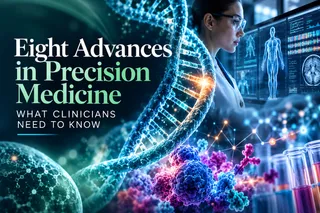
Eight Advances in Precision Medicine: What Clinicians Need to Know
Explore eight advances in precision medicine, from rapid genomic sequencing and targeted cancer therapies to gene therapy, and discover what these breakthroughs mean for clinical practice. ...more
On the Frontier
October 22, 2026•10 min read
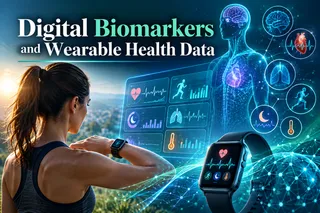
Digital Biomarkers and Wearable Health Data
Explore how digital biomarkers and wearable technologies are enabling continuous health monitoring, early disease detection, and more personalized approaches to precision medicine. ...more
On the Frontier
October 15, 2026•8 min read
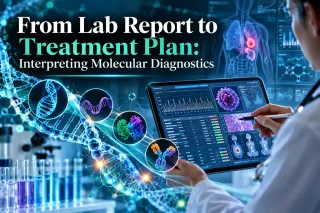
From Lab Report to Treatment Plan: Interpreting Molecular Diagnostics
Explore how clinicians interpret molecular diagnostic reports and translate genomic, transcriptomic, and proteomic findings into informed, personalized treatment decisions. ...more
Precision Medicine in Action
October 08, 2026•8 min read
Stay at the Forefront of Precision Medicine
Subscribe to receive ABOPM insights, research updates, and educational resources delivered directly to your inbox.
Advancing education, certification, and leadership to shape a genomics-driven, data-intelligent future of healthcare.
COMPANY
RESOURCES


© 2023-2025 American Board of Precision Medicine, Inc. All Rights Reserved.