
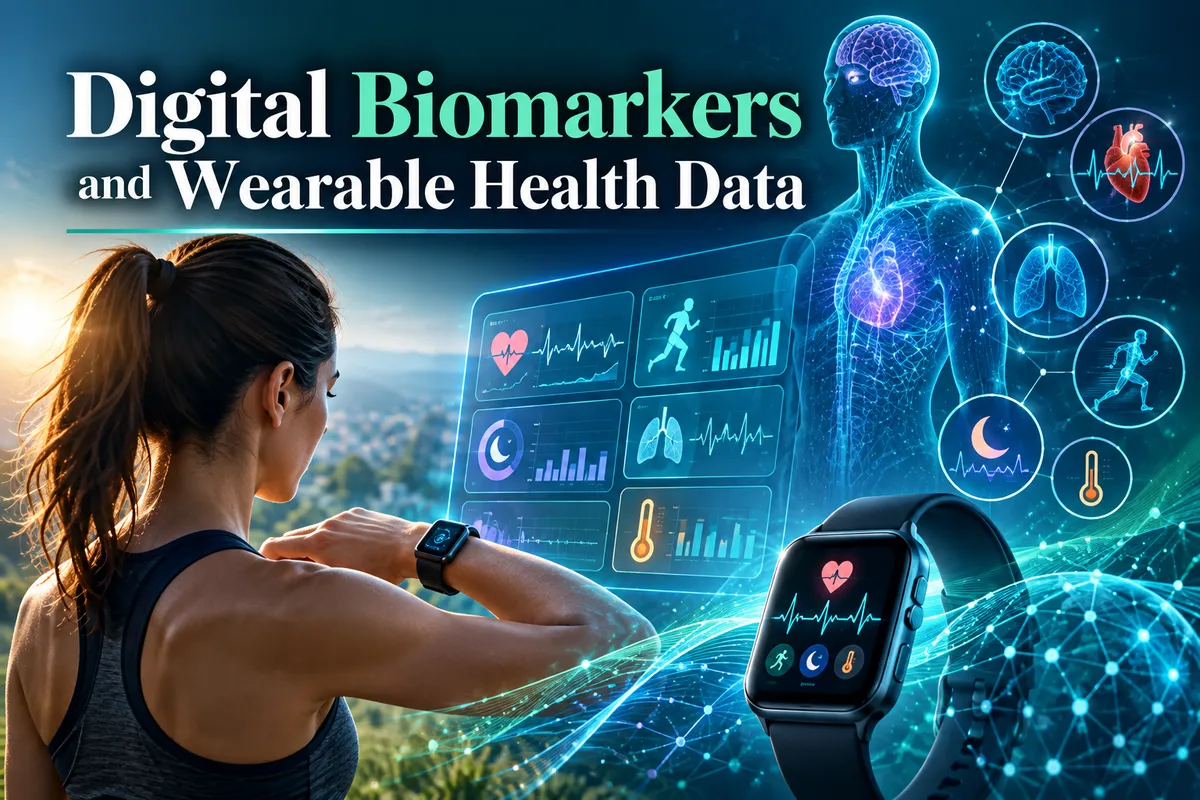
Digital Biomarkers and Wearable Health Data
Introduction
Over the past decade, wearable health technologies have become increasingly integrated into everyday life. Devices such as smartwatches, fitness trackers, and biosensor-equipped clothing are capable of continuously measuring physiological signals including heart rate, physical activity, sleep patterns, and metabolic indicators. These technologies have transformed how individuals monitor their health and have also opened new opportunities for clinicians and researchers to collect real-world physiological data at scale.
The growing adoption of wearable technologies has led to the emergence of digital biomarkers objective, quantifiable physiological and behavioral data collected through digital devices that can inform health status and disease progression. Unlike traditional clinical measurements that are obtained during intermittent medical visits, digital biomarkers allow for continuous, longitudinal monitoring of biological processes.
Digital health technologies are increasingly being explored as tools for precision medicine. By capturing real-time physiological data across large populations, wearable devices may help identify early signs of disease, monitor treatment responses, and personalize health interventions. Research published in npj Digital Medicine highlights the potential of digital biomarkers to complement conventional clinical diagnostics and support more individualized healthcare strategies.
However, integrating wearable data into clinical practice raises several challenges, including issues related to data reliability, interpretation, privacy, and regulatory oversight. Understanding both the potential and limitations of digital biomarkers is essential for clinicians, healthcare leaders, and researchers working in the evolving field of precision medicine.
The Rise of Wearable Health Technology
Wearable devices capable of measuring physiological signals have evolved rapidly in recent years. Early consumer health devices primarily focused on tracking steps or estimating calorie expenditure. Modern wearable technologies now incorporate advanced sensors capable of measuring multiple physiological parameters simultaneously.
Common sensors integrated into wearable devices include:
Photoplethysmography (PPG) sensors for heart rate monitoring
Accelerometers and gyroscopes for movement and activity tracking
Electrocardiogram (ECG) sensors for cardiac rhythm monitoring
Skin temperature sensors for thermoregulation assessment
Electrodermal activity sensors for stress and autonomic nervous system responses
These sensors enable continuous monitoring of physiological signals that were previously accessible only through clinical diagnostic equipment.
The proliferation of smartphones and wireless connectivity has further expanded the capabilities of wearable technologies. Health data collected by wearable devices can be transmitted to cloud-based platforms, enabling large-scale data analysis and integration with electronic health records.
As wearable technologies become more sophisticated, they are increasingly being studied as potential tools for early disease detection and remote patient monitoring.
What Digital Biomarkers Are
Digital biomarkers are defined as physiological or behavioral measures collected through digital devices that can indicate health status or disease processes. These biomarkers differ from traditional laboratory or imaging biomarkers because they are derived from continuous monitoring rather than single clinical measurements.
Digital biomarkers may include metrics such as:
Heart rate variability
Activity levels and mobility patterns
Sleep duration and sleep architecture
Respiratory rate
Body temperature
Continuous glucose levels
Because these measurements can be collected continuously over extended periods, digital biomarkers provide insight into physiological variability and patterns that may not be captured during periodic clinical assessments.
Continuous monitoring also enables the detection of subtle physiological changes that may precede the onset of disease symptoms. For example, deviations from an individual's baseline heart rate variability or sleep patterns may indicate early signs of infection, metabolic dysregulation, or cardiovascular abnormalities.
In research settings, digital biomarkers are increasingly being evaluated for their ability to serve as endpoints in clinical trials, particularly in studies involving chronic diseases or neurological disorders.
Continuous Physiological Monitoring
One of the defining characteristics of digital biomarkers is their ability to capture longitudinal physiological data. Continuous monitoring enables clinicians and researchers to observe dynamic biological processes over time rather than relying on isolated measurements.
This approach offers several potential advantages:
Detection of early physiological changes before clinical symptoms appear
Improved monitoring of chronic diseases
More accurate assessment of treatment responses
Greater understanding of individual variability in health patterns
For example, continuous heart rhythm monitoring may identify episodes of atrial fibrillation that occur intermittently and might otherwise go undetected during routine clinical examinations.
Similarly, continuous glucose monitoring devices used by individuals with diabetes provide real-time information about blood glucose fluctuations, enabling more precise management of metabolic control.
These examples illustrate how digital biomarkers may support more personalized and proactive healthcare strategies.
Applications in Precision Medicine
Cardiovascular Monitoring
Cardiovascular disease remains a leading cause of mortality worldwide, and early detection of cardiac abnormalities is critical for preventing adverse outcomes. Wearable devices equipped with heart rate sensors and ECG capabilities have demonstrated potential for detecting arrhythmias and other cardiac conditions.
Several studies have shown that wearable ECG devices can identify episodes of atrial fibrillation, a common cardiac arrhythmia associated with increased risk of stroke. Early detection of atrial fibrillation may allow clinicians to initiate preventive therapies such as anticoagulation.
Heart rate variability measurements collected through wearable devices may also provide insights into autonomic nervous system function and cardiovascular health. Changes in these metrics may reflect stress, inflammation, or early cardiovascular dysfunction.
As wearable technologies continue to improve, their integration into cardiovascular monitoring programs may support earlier detection and management of heart disease.
Neurological Disease Detection
Digital biomarkers are also being investigated for applications in neurological disorders. Many neurological diseases, including Parkinson’s disease, Alzheimer’s disease, and multiple sclerosis, involve subtle changes in movement, cognition, or physiological function that may develop gradually over time.
Wearable devices equipped with motion sensors can analyze gait patterns, tremor frequency, and motor coordination. These measurements may help detect early neurological changes or monitor disease progression.
For example, in Parkinson’s disease, wearable sensors may capture changes in movement patterns that correlate with disease severity or medication response. Similarly, digital cognitive assessments delivered through smartphone applications may provide insights into early cognitive decline associated with neurodegenerative diseases.
These approaches have the potential to complement traditional neurological assessments and support more precise monitoring of disease progression.
Metabolic Tracking
Metabolic disorders such as diabetes and obesity are increasingly prevalent worldwide. Digital biomarkers derived from wearable devices may support improved monitoring of metabolic health.
Continuous glucose monitoring systems represent one of the most well-established examples of digital biomarkers in metabolic disease management. These devices measure glucose levels in interstitial fluid at frequent intervals, providing detailed information about glucose fluctuations throughout the day.
In addition to glucose monitoring, wearable devices can track physical activity, sleep patterns, and energy expenditure factors that influence metabolic health. Integrating these data streams may provide a more comprehensive view of metabolic physiology and support personalized lifestyle interventions.
Digital biomarkers may therefore play an important role in preventive health strategies aimed at reducing the burden of metabolic disease.
Implementation Challenges
Despite their potential, several challenges must be addressed before digital biomarkers can be widely integrated into clinical practice.
Data Reliability
One major concern involves the accuracy and reliability of data collected by consumer-grade wearable devices. Although sensor technologies have improved substantially, variability in device calibration, measurement methods, and environmental conditions can affect data quality.
Clinical validation studies are necessary to ensure that digital biomarkers accurately reflect physiological processes and provide meaningful information for medical decision-making.
Standardization of measurement methods and data interpretation frameworks will be essential for integrating wearable data into healthcare systems.
Data Privacy and Security
Wearable devices generate large volumes of personal health data, raising important questions about data privacy and security. Many wearable devices transmit data to cloud-based platforms operated by technology companies, which may not be subject to the same regulatory frameworks as healthcare institutions.
Protecting patient privacy and ensuring secure data storage are critical considerations for the widespread adoption of digital health technologies. Regulatory frameworks governing digital health data are evolving, and collaboration among technology developers, healthcare organizations, and policymakers will be necessary to establish appropriate standards.
Future Research Directions
The field of digital biomarkers is evolving rapidly, and several areas of research may shape its future development.
First, integrating wearable data with other sources of health information including genomic data, electronic health records, and environmental exposure data may provide a more comprehensive view of individual health.
Second, advances in machine learning and artificial intelligence may enable the analysis of complex physiological datasets generated by wearable devices. These computational approaches may help identify patterns associated with disease risk or treatment response.
Third, digital biomarkers may play an increasingly important role in clinical research. Continuous monitoring technologies may provide new endpoints for clinical trials, enabling more precise assessment of treatment effects.
Finally, improvements in sensor technology and device miniaturization may expand the range of physiological parameters that can be monitored through wearable devices.
Conclusion
Wearable health technologies and digital biomarkers represent an emerging frontier in precision medicine. By enabling continuous monitoring of physiological processes, these technologies offer new opportunities for early disease detection, chronic disease management, and personalized healthcare interventions.
Applications in cardiovascular monitoring, neurological disease detection, and metabolic tracking illustrate the potential of digital biomarkers to complement traditional clinical diagnostics. At the same time, challenges related to data reliability, privacy, and regulatory oversight must be addressed before these technologies can be fully integrated into clinical practice.
As healthcare systems increasingly incorporate digital health technologies, clinicians and researchers will need to develop frameworks for interpreting and applying wearable-derived data in meaningful ways. Continued research and interdisciplinary collaboration will be essential to ensure that digital biomarkers contribute effectively to the future of precision medicine.
References
Coravos A, Khozin S, Mandl KD. Developing and adopting safe and effective digital biomarkers to improve patient outcomes. npj Digital Medicine. https://www.nature.com/articles/s41746-019-0098-x
Topol EJ. High-performance medicine: the convergence of human and artificial intelligence. Nature Medicine.
Steinhubl SR, Muse ED, Topol EJ. The emerging field of mobile health. Science Translational Medicine.
Piwek L, Ellis DA, Andrews S, Joinson A. The rise of consumer health wearables. PLOS Medicine.
Dunn J, Runge R, Snyder M. Wearables and the medical revolution. npj Digital Medicine.