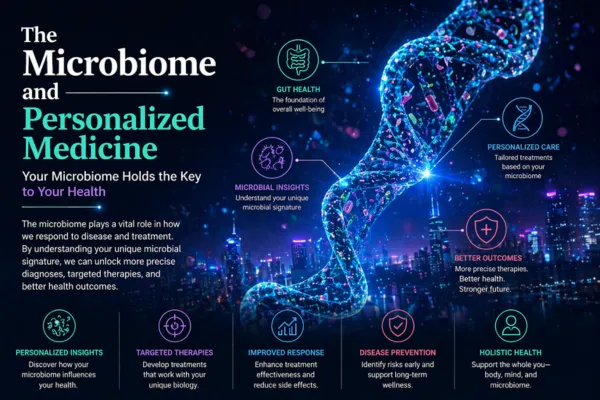
The Microbiome and Personalized Medicine
Introduction
Over the past two decades, scientific understanding of the human microbiome—the collection of microorganisms that inhabit the human body—has expanded significantly. Advances in high-throughput sequencing and metagenomic analysis have revealed that trillions of microorganisms, including bacteria, viruses, fungi, and archaea, reside within the human body, particularly in the gastrointestinal tract. These microbial communities collectively contain a vast array of genes and metabolic capabilities that interact with human physiology.
Historically, microorganisms were primarily studied in the context of infectious disease. However, contemporary research has demonstrated that the microbiome also plays essential roles in maintaining health and regulating biological systems. The composition and activity of microbial communities influence numerous physiological processes, including metabolism, immune function, and neurological signaling.
As a result, the microbiome is increasingly recognized as an important contributor to individual variation in health and disease. Differences in microbial composition may influence susceptibility to certain conditions, treatment responses, and long-term health outcomes. These findings have generated growing interest in the role of the microbiome in precision and personalized medicine.
The integration of microbiome science into clinical research has opened new opportunities to better understand disease mechanisms and develop personalized therapeutic approaches. As highlighted in recent reviews, microbiome research is reshaping perspectives on host–microbe interactions and their implications for human health (Lynch & Pedersen, 2016; Thursby & Juge, 2017). This article examines the role of the microbiome in human physiology, its emerging clinical applications, and the potential for microbiome-based interventions in precision medicine.
The Role of the Microbiome in Human Health
Microbial Diversity and Host Interaction
The human microbiome varies significantly between individuals and across different body sites. The gastrointestinal tract hosts the largest microbial population, with microbial densities exceeding 10¹¹ organisms per gram of intestinal content. These microbial communities perform numerous biological functions that are essential for maintaining host homeostasis.
The composition of the microbiome is influenced by a range of factors, including genetics, diet, environment, antibiotic exposure, and early-life microbial colonization. Because microbial communities are dynamic and responsive to environmental influences, they represent an important interface between host biology and external factors.
Research has demonstrated that alterations in microbiome composition—often referred to as dysbiosis—are associated with various diseases. Dysbiosis has been implicated in metabolic disorders, inflammatory diseases, gastrointestinal conditions, and neurological disorders. However, the causal relationships between microbial changes and disease processes remain an active area of investigation.
Microbiome and Metabolism
One of the most well-established functions of the microbiome involves its role in metabolism. Gut microorganisms participate in the digestion of dietary components that are otherwise difficult for the human host to metabolize, including complex carbohydrates and fiber.
Through fermentation processes, gut bacteria produce short-chain fatty acids (SCFAs) such as acetate, propionate, and butyrate. These metabolites serve as energy sources for intestinal epithelial cells and play important roles in metabolic regulation and immune signaling.
The microbiome also influences the metabolism of bile acids, amino acids, and lipids. Variations in microbial composition have been associated with differences in metabolic efficiency and nutrient absorption. These interactions have led researchers to investigate the microbiome’s role in metabolic diseases such as obesity and type 2 diabetes.
Studies in both animal models and human populations have demonstrated that changes in gut microbiota can influence body weight, glucose metabolism, and insulin sensitivity. Although the mechanisms remain complex, microbial metabolites appear to play a significant role in host metabolic regulation.
Microbiome and Immunity
The immune system is closely linked to microbial communities within the body. The gastrointestinal tract, which contains a large portion of the body’s immune cells, continuously interacts with microbial populations.
The microbiome contributes to immune system development by stimulating immune cell maturation and promoting immune tolerance to beneficial microbes. Microbial signals help regulate the balance between pro-inflammatory and anti-inflammatory immune responses.
Certain microbial metabolites, including short-chain fatty acids, have been shown to influence regulatory T-cell function and immune homeostasis. Conversely, disruptions in microbial communities may contribute to immune dysregulation and inflammatory diseases.
Associations between microbiome alterations and immune-related conditions have been observed in diseases such as inflammatory bowel disease, asthma, and autoimmune disorders. These findings suggest that microbial composition may influence immune responses and disease susceptibility.
Microbiome and Neurological Signaling
The microbiome is also involved in communication between the gastrointestinal tract and the central nervous system, a relationship often referred to as the gut–brain axis. This bidirectional communication system involves neural, endocrine, and immune pathways.
Microbial metabolites can influence neurotransmitter production, neural signaling pathways, and inflammatory responses within the nervous system. For example, certain gut bacteria can produce neurotransmitter precursors such as serotonin and gamma-aminobutyric acid (GABA).
Emerging research suggests that alterations in the microbiome may be associated with neurological and psychiatric conditions, including depression, anxiety disorders, and neurodegenerative diseases. While the mechanisms remain incompletely understood, the microbiome–brain connection represents an important area of ongoing investigation.
Clinical Applications of Microbiome Research
Metabolic Disease
One of the most actively studied clinical applications of microbiome research involves metabolic diseases such as obesity and type 2 diabetes. Studies have demonstrated differences in microbial diversity and metabolic activity between individuals with obesity and those with normal metabolic profiles.
Experimental studies have shown that transplanting gut microbiota from individuals with obesity into germ-free animal models can influence weight gain and metabolic function. These findings suggest that microbial communities may play a role in regulating energy balance and metabolic pathways.
Researchers are exploring whether microbiome-based interventions—such as dietary modification, probiotics, or microbiota transplantation—may help improve metabolic health.
Gastrointestinal Disorders
The role of the microbiome is particularly well established in gastrointestinal diseases. Dysbiosis has been implicated in conditions such as inflammatory bowel disease (IBD), irritable bowel syndrome (IBS), and colorectal cancer.
In IBD, alterations in microbial composition may contribute to chronic intestinal inflammation. Studies have identified reduced microbial diversity and shifts in microbial populations in patients with Crohn’s disease and ulcerative colitis.
One therapeutic approach that has gained clinical attention is fecal microbiota transplantation (FMT), which involves transferring stool from a healthy donor to a patient with microbiome-associated disease. FMT has shown high efficacy in treating recurrent Clostridioides difficile infection and is being investigated for other gastrointestinal conditions.
Microbiome and Drug Response
Another emerging area of research examines how the microbiome influences responses to medications. Microbial enzymes can metabolize certain drugs, potentially affecting their bioavailability and therapeutic effectiveness.
In oncology, studies have suggested that the gut microbiome may influence responses to immune checkpoint inhibitors. Certain microbial species appear to enhance antitumor immune responses, while others may contribute to treatment resistance.
These findings raise the possibility that microbiome profiling could help predict treatment responses and guide therapeutic strategies.
Future Therapeutics: Microbiome Engineering
Microbiome Modulation
As understanding of the microbiome expands, researchers are exploring strategies to modify microbial communities for therapeutic benefit. Approaches under investigation include dietary interventions, targeted probiotics, and microbial metabolite therapies.
Diet is one of the most significant factors influencing microbial composition. Dietary fiber intake, for example, promotes the growth of bacteria that produce beneficial short-chain fatty acids.
Probiotic therapies aim to introduce beneficial microbial strains into the gastrointestinal tract, although the clinical efficacy of many probiotic formulations remains under investigation.
Microbiome Engineering and Synthetic Biology
More advanced strategies involve microbiome engineering, in which microbial communities are intentionally modified to influence host physiology. Advances in synthetic biology have enabled the development of engineered bacterial strains capable of producing therapeutic molecules or modulating immune responses.
These approaches are still in early stages of development but may eventually enable highly targeted interventions for metabolic, inflammatory, or infectious diseases.
However, microbiome-based therapies also raise important questions related to safety, regulation, and long-term ecological effects within microbial communities.
Implementation Challenges
Despite rapid advances in microbiome research, translating these findings into clinical practice presents several challenges.
One major challenge is the complexity of microbial ecosystems. Microbiome composition varies widely among individuals and is influenced by numerous environmental and lifestyle factors. Establishing causal relationships between specific microbial changes and disease processes remains difficult.
Standardization of microbiome sampling, sequencing methods, and analytical pipelines is another important issue. Differences in methodology can produce inconsistent results across studies.
In addition, regulatory frameworks for microbiome-based therapies are still evolving. Determining appropriate safety standards and clinical trial designs will be essential for advancing microbiome therapeutics.
Conclusion
The human microbiome plays an essential role in maintaining physiological balance and influencing disease processes. Research over the past decade has revealed that microbial communities interact with host metabolism, immune function, and neurological signaling pathways in complex ways.
These discoveries have expanded the scope of precision medicine by highlighting the microbiome as a key determinant of individual health and treatment responses. Clinical applications of microbiome research are emerging in areas such as metabolic disease, gastrointestinal disorders, and cancer therapy.
However, translating microbiome science into routine clinical practice requires continued research to clarify causal relationships, standardize analytical methods, and ensure the safety and efficacy of microbiome-based interventions.
As technologies for microbial sequencing, metabolomics, and computational analysis continue to evolve, the integration of microbiome data into precision medicine frameworks may offer new opportunities for individualized healthcare. Understanding the complex interactions between host biology and microbial ecosystems will remain an important frontier in biomedical research.
References
Lynch, S. V., & Pedersen, O. (2016). The human intestinal microbiome in health and disease. New England Journal of Medicine.
Thursby, E., & Juge, N. (2017). Introduction to the human gut microbiota. Biochemical Journal.
Turnbaugh, P. J., et al. (2007). The human microbiome project. Nature .
Nature Reviews Microbiology. The microbiome and human health.
https://www.nature.com/articles/s41579-018-0022-2
