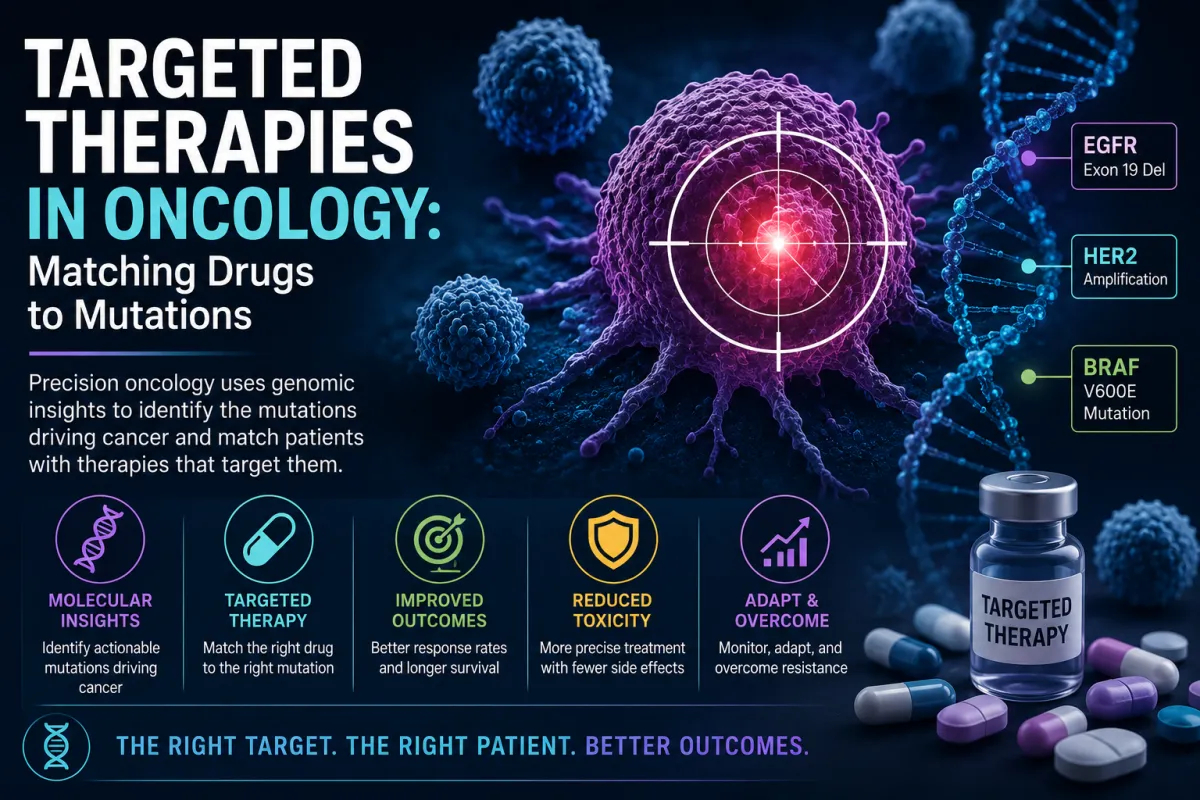
Targeted Therapies in Oncology: Matching Drugs to Mutations
Introduction
Advances in cancer genomics have transformed the understanding of tumor biology and have significantly influenced the development of modern cancer therapies. Historically, cancer treatment strategies relied primarily on surgery, radiation therapy, and cytotoxic chemotherapy. While these approaches remain central to oncology care, they generally target rapidly dividing cells without distinguishing between malignant and healthy tissues. As a result, treatment may be associated with substantial toxicity and variable therapeutic response.
Over the past two decades, increasing knowledge of the molecular mechanisms driving tumor development has led to the emergence of targeted therapies. Targeted therapies are designed to interfere with specific molecular pathways or genetic alterations that promote cancer cell growth and survival. Rather than broadly affecting all proliferating cells, these therapies aim to selectively inhibit the biological drivers of tumor progression.
This shift toward molecularly informed treatment represents a cornerstone of precision oncology, in which therapeutic decisions are guided by genomic alterations identified through tumor profiling. By identifying mutations in key signaling pathways, clinicians can match patients with therapies that specifically target those molecular abnormalities. Molecular profiling, often performed through next-generation sequencing (NGS), allows clinicians to identify oncogenic mutations and select therapies that directly inhibit the signaling pathways involved in tumor growth.
As targeted therapies continue to expand across multiple cancer types, clinicians and researchers are increasingly focused on understanding how genomic alterations influence treatment response, how resistance develops, and how molecular information can be integrated into routine clinical practice.
What Targeted Therapy Means
Targeted therapy refers to treatments designed to interfere with specific molecular targets involved in cancer development and progression. These targets are typically proteins or signaling pathways that regulate cell proliferation, apoptosis, angiogenesis, or immune evasion.
Unlike traditional chemotherapy, which affects both malignant and normal rapidly dividing cells, targeted therapies are developed to interact with particular molecular abnormalities found in tumor cells. These abnormalities are often caused by genetic mutations, gene amplifications, or chromosomal rearrangements.
Targeted therapies generally fall into two broad categories:
Small molecule inhibitors, which enter cells and block intracellular signaling proteins, often kinases.
Monoclonal antibodies, which bind to extracellular receptors or ligands involved in cancer signaling pathways.
The development of targeted therapy depends heavily on identifying driver mutations—genetic alterations that play a critical role in initiating or maintaining cancer growth. By inhibiting these driver pathways, targeted therapies can suppress tumor proliferation and improve clinical outcomes in selected patient populations.
The increasing availability of molecular diagnostics has made it possible to detect these alterations in routine clinical care. Molecular profiling of tumors now guides treatment selection in several malignancies, including lung cancer, melanoma, breast cancer, and colorectal cancer.
How Mutations Drive Cancer
Cancer arises from the accumulation of genetic alterations that disrupt normal cellular regulatory mechanisms. These alterations can affect genes involved in cell growth, differentiation, and survival. Two major categories of genes play particularly important roles in oncogenesis: oncogenes and tumor suppressor genes.
Oncogenes
Oncogenes are mutated or overexpressed versions of normal genes known as proto-oncogenes, which typically regulate cell growth and division. When proto-oncogenes become activated through mutations or amplification, they can promote uncontrolled cellular proliferation.
Examples of oncogenic signaling pathways include:
EGFR signaling in lung cancer
BRAF signaling in melanoma
HER2 signaling in breast cancer
Mutations in these genes can result in continuous activation of growth-promoting pathways, allowing tumor cells to proliferate independently of normal regulatory signals.
Because oncogenes often encode proteins involved in signaling cascades—such as receptor tyrosine kinases—they represent attractive targets for drug development. Inhibiting these proteins can disrupt the signaling pathways that sustain tumor growth.
Tumor Suppressor Genes
Tumor suppressor genes serve the opposite function of oncogenes. These genes normally regulate cell cycle progression, promote DNA repair, and initiate apoptosis when cellular damage occurs.
When tumor suppressor genes become inactivated through mutations or deletions, cells may lose critical mechanisms that prevent uncontrolled proliferation. Examples of tumor suppressor genes frequently altered in cancer include TP53, RB1, and PTEN.
Unlike oncogenes, tumor suppressor gene alterations are often more difficult to target therapeutically because they involve loss of function rather than abnormal activation of a signaling pathway. However, understanding the pathways affected by tumor suppressor gene loss can still inform treatment strategies.
The interplay between oncogene activation and tumor suppressor gene inactivation drives many forms of cancer. Molecular profiling enables clinicians to identify these alterations and select therapies targeting the relevant pathways.
Examples of Targeted Therapies
Several targeted therapies have become standard treatments for cancers characterized by specific molecular alterations. These therapies demonstrate how identifying genetic mutations can guide treatment decisions.
EGFR Inhibitors
Mutations in the epidermal growth factor receptor (EGFR) gene occur in a subset of non-small cell lung cancers (NSCLC), particularly in lung adenocarcinomas. These mutations result in continuous activation of the EGFR signaling pathway, promoting tumor cell proliferation.
EGFR tyrosine kinase inhibitors (TKIs) were developed to block this pathway by inhibiting the kinase activity of the receptor. Clinical trials have demonstrated that patients with EGFR-mutant NSCLC often experience improved response rates and progression-free survival when treated with EGFR inhibitors compared with standard chemotherapy.
These findings have established EGFR mutation testing as a routine component of molecular diagnostics in lung cancer.
HER2 Therapies
Amplification or overexpression of the human epidermal growth factor receptor 2 (HER2) gene occurs in approximately 15-20% of breast cancers. HER2-positive tumors tend to exhibit aggressive biological behavior but are responsive to targeted therapies designed to inhibit HER2 signaling.
Monoclonal antibodies and other HER2-directed therapies bind to the HER2 receptor and disrupt signaling pathways involved in tumor growth. The introduction of HER2-targeted therapy has significantly improved survival outcomes for patients with HER2-positive breast cancer.
These therapies illustrate how identifying a specific molecular alteration can lead to the development of highly effective targeted treatments.
BRAF Inhibitors
Mutations in the BRAF gene, particularly the BRAF V600E mutation, are commonly found in melanoma and several other cancers. The BRAF protein is part of the MAPK signaling pathway, which regulates cell growth and differentiation.
The BRAF V600E mutation results in continuous activation of this pathway, leading to uncontrolled cellular proliferation. BRAF inhibitors were developed to specifically target this mutated protein and interrupt the signaling cascade.
Clinical studies have shown that BRAF inhibitors can produce substantial tumor responses in patients with BRAF-mutant melanoma. However, resistance often develops, prompting the use of combination therapies targeting multiple components of the MAPK pathway.
Benefits of Targeted Therapy
The development of targeted therapies has introduced several advantages compared with traditional cytotoxic treatments.
Increased Treatment Precision
Targeted therapies allow clinicians to select treatments based on the molecular characteristics of a patient’s tumor rather than relying solely on tumor histology or anatomical location.
This approach can improve therapeutic effectiveness by focusing treatment on the biological drivers of disease. Molecular profiling helps identify signaling pathways involved in tumor progression, allowing clinicians to match therapies to specific genetic alterations.
This level of treatment personalization represents one of the central goals of precision oncology.
Reduced Toxicity
Because targeted therapies are designed to interact with specific molecular targets, they may produce fewer systemic toxicities than traditional chemotherapy. Cytotoxic drugs often affect rapidly dividing normal cells, leading to side effects such as myelosuppression, gastrointestinal toxicity, and hair loss.
While targeted therapies have their own adverse effect profiles, their mechanism of action may limit damage to healthy tissues compared with nonspecific treatments.
However, toxicity profiles vary depending on the specific target and drug class, and ongoing monitoring remains essential during therapy.
Challenges in Targeted Oncology
Despite their clinical benefits, targeted therapies also face significant challenges that limit their long-term effectiveness.
Drug Resistance
One of the most common challenges in targeted oncology is the development of drug resistance. Tumor cells may acquire additional mutations that alter the drug target or activate alternative signaling pathways.
For example, secondary mutations in EGFR or activation of bypass signaling pathways can reduce the effectiveness of EGFR inhibitors in lung cancer. Similarly, resistance mechanisms frequently emerge during treatment with BRAF inhibitors in melanoma.
Understanding these resistance mechanisms has become a major focus of oncology research and has led to the development of next-generation inhibitors and combination therapies.
Tumor Evolution
Cancer is a dynamic disease characterized by ongoing genomic evolution. Tumor cells accumulate genetic alterations over time, creating heterogeneous populations of cells with different molecular profiles.
This heterogeneity means that targeted therapies directed against one mutation may not eliminate all tumor cells. Subclonal populations lacking the targeted mutation may continue to proliferate, leading to disease progression.
Monitoring tumor evolution through repeated molecular testing—including liquid biopsy techniques—may help identify emerging resistance mechanisms and guide treatment adjustments.
Future Directions
The continued advancement of targeted oncology will likely depend on several emerging areas of research.
First, comprehensive genomic profiling is becoming increasingly integrated into clinical oncology workflows, allowing clinicians to identify a broader range of actionable mutations.
Second, combination therapies targeting multiple pathways simultaneously may help overcome resistance mechanisms and improve treatment durability.
Third, advances in liquid biopsy technologies may enable real-time monitoring of tumor evolution through circulating tumor DNA analysis.
Finally, the development of tumor-agnostic therapies—drugs approved based on molecular alterations rather than tumor type—represents a growing paradigm in precision oncology.
These innovations may expand the range of patients who benefit from targeted therapies and improve long-term disease control.
Conclusion
Targeted therapies have transformed the treatment landscape of oncology by enabling therapies that directly inhibit the molecular drivers of cancer. Through genomic profiling and molecular diagnostics, clinicians can identify mutations in oncogenes and signaling pathways that sustain tumor growth.
Examples such as EGFR inhibitors, HER2-directed therapies, and BRAF inhibitors demonstrate how matching drugs to mutations can improve clinical outcomes and advance personalized cancer treatment.
However, challenges including drug resistance, tumor heterogeneity, and genomic evolution highlight the need for ongoing research and adaptive treatment strategies. Continued advances in molecular diagnostics, computational biology, and drug development will likely expand the role of targeted therapies in oncology.
For clinicians and healthcare leaders involved in precision medicine, understanding how genomic alterations guide targeted therapy selection will remain essential as oncology continues to move toward increasingly individualized treatment approaches.
References
Garraway LA, Verweij J, Ballman KV. Precision Oncology: An Overview. J Clin Oncol.
Malone ER et al. Precision oncology: Current landscape and future directions. CA: A Cancer Journal for Clinicians.
Dienstmann R et al. Genomic medicine frontier in oncology. Nature Reviews Clinical Oncology.
Hyman DM et al. The emerging paradigm of tumor-agnostic therapies. Nature Medicine.
Tsimberidou AM et al. Personalized medicine in oncology: Molecular profiling and targeted therapy. JAMA Oncology.