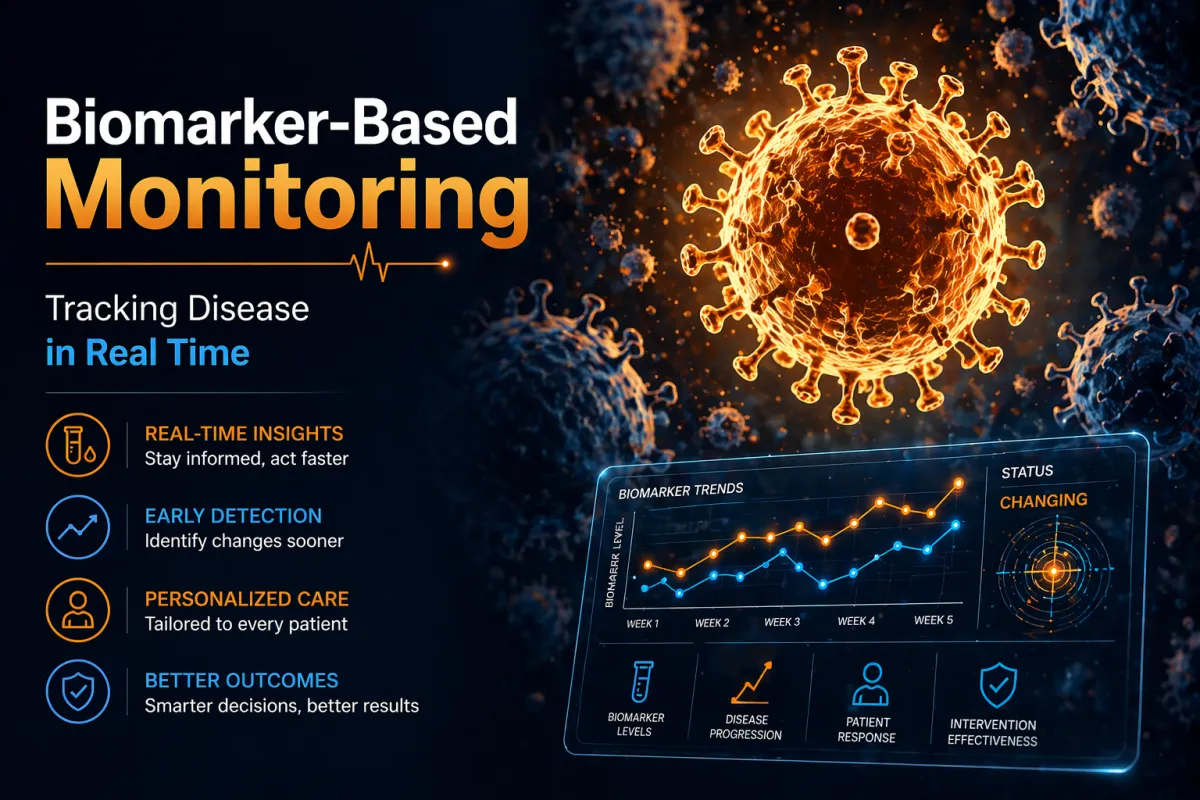
Biomarker-Based Monitoring: Tracking Disease Progression in Real Time
Introduction
Monitoring disease activity is a fundamental component of clinical medicine. Accurate assessment of disease progression enables clinicians to evaluate treatment effectiveness, detect complications, and adjust therapeutic strategies. Traditionally, monitoring has relied on clinical symptoms, imaging studies, and routine laboratory tests. While these approaches remain essential, they may not always capture early biological changes associated with disease progression or treatment response.
Advances in molecular diagnostics have introduced new opportunities to monitor disease activity through biomarkers measurable biological indicators that reflect physiological or pathological processes. Biomarkers can be detected in blood, tissue, urine, or other biological samples and can provide insights into disease activity at the molecular level.
Biomarker-based monitoring has become increasingly important in precision medicine. By tracking changes in biomarker levels over time, clinicians can obtain real-time information about disease dynamics. This approach is particularly valuable for chronic diseases, cancer, and cardiovascular conditions where disease trajectories may change rapidly.
Biomarkers provide quantifiable measures that complement clinical evaluation and imaging. As described in biomedical literature, biomarkers function as measurable indicators of disease activity and treatment response across multiple medical specialties (Strimbu & Tavel, 2010; Califf, 2018). Their use has expanded significantly in recent decades as advances in molecular biology and diagnostic technologies have improved their detection and interpretation.
This article explores the role of biomarker-based monitoring in clinical medicine, examining the types of biomarkers used to track disease progression, their clinical applications, and emerging developments that may further enhance disease monitoring in the future.
Types of Monitoring Biomarkers
Biomarkers used in disease monitoring vary widely in their biological origins and clinical applications. Among the most commonly used categories are inflammatory biomarkers, cancer biomarkers, and cardiac biomarkers. Each category provides distinct information about disease activity and physiological responses.
Inflammatory Markers
Inflammation plays a central role in many diseases, including autoimmune disorders, infections, and cardiovascular disease. Biomarkers associated with inflammatory processes are therefore widely used to assess disease activity.
One of the most frequently measured inflammatory biomarkers is C-reactive protein (CRP). CRP is an acute-phase protein produced by the liver in response to inflammatory cytokines such as interleukin-6. Elevated CRP levels are associated with a range of inflammatory conditions, including rheumatoid arthritis, systemic infections, and inflammatory bowel disease.
Another commonly used inflammatory marker is the erythrocyte sedimentation rate (ESR), which reflects changes in plasma protein composition associated with inflammatory states. ESR is frequently used in rheumatology to monitor disease activity in conditions such as polymyalgia rheumatica and giant cell arteritis.
More recently, research has explored additional inflammatory biomarkers, including cytokines and chemokines, that may provide more specific information about immune system activity. These markers may help distinguish between different inflammatory pathways and support more precise treatment strategies.
Cancer Biomarkers
In oncology, biomarkers play an important role in monitoring tumor burden and evaluating treatment response. Cancer biomarkers may include proteins, genetic alterations, or other molecular signals released by tumor cells.
One example is prostate-specific antigen (PSA), which is widely used to monitor prostate cancer progression and treatment response. Rising PSA levels after treatment may indicate disease recurrence or progression.
Another example is carcinoembryonic antigen (CEA), which is often used to monitor colorectal cancer. Serial measurements of CEA levels can help detect recurrence following surgical treatment.
In addition to protein-based biomarkers, emerging technologies have enabled the detection of circulating tumor DNA (ctDNA), which consists of fragments of tumor-derived DNA found in the bloodstream. ctDNA analysis can provide information about tumor burden and molecular changes associated with treatment resistance.
Although cancer biomarkers are valuable monitoring tools, their interpretation must be considered within the broader clinical context. Biomarker levels can be influenced by factors unrelated to disease progression, and not all cancers produce detectable biomarkers.
Cardiac Biomarkers
Cardiac biomarkers are essential tools for diagnosing and monitoring cardiovascular disease. Among the most important cardiac biomarkers are cardiac troponins, which are released into the bloodstream when heart muscle cells are damaged.
High-sensitivity troponin assays have improved the ability to detect myocardial injury, enabling earlier diagnosis of myocardial infarction and more precise monitoring of cardiac events.
Another widely used cardiac biomarker is B-type natriuretic peptide (BNP) and its related peptide NT-proBNP. These peptides are released in response to increased cardiac wall stress and are commonly used to assess heart failure severity.
Monitoring BNP levels over time can provide insight into disease progression and treatment response in patients with heart failure. Declining BNP levels may indicate improved cardiac function, while rising levels may signal worsening disease.
Clinical Applications of Biomarker-Based Monitoring
Monitoring Treatment Response
One of the primary applications of biomarker-based monitoring is evaluating the effectiveness of therapeutic interventions. Changes in biomarker levels following treatment can provide early evidence of treatment success or failure.
For example, in oncology, declining tumor biomarker levels may indicate a positive response to therapy. Conversely, rising levels may suggest treatment resistance or disease progression.
Similarly, in inflammatory diseases such as rheumatoid arthritis, reductions in CRP or other inflammatory markers often correlate with improvements in clinical symptoms and disease activity scores.
Biomarker-based monitoring allows clinicians to adjust treatment strategies more rapidly than would be possible through clinical observation alone. Early detection of inadequate treatment response may prompt changes in therapy before significant disease progression occurs.
Detecting Relapse
Biomarkers are also valuable for detecting disease recurrence following treatment. In many diseases, biomarker changes may occur before clinical symptoms or imaging findings become apparent.
For example, increases in PSA levels following prostate cancer treatment may indicate biochemical recurrence before radiographic evidence of disease appears. Similarly, rising tumor markers in other cancers may signal early relapse.
In autoimmune diseases, elevations in inflammatory biomarkers may indicate disease flares. Monitoring these biomarkers can therefore support proactive disease management and early intervention.
Early detection of relapse can improve patient outcomes by allowing clinicians to initiate treatment adjustments sooner.
Future Developments in Biomarker Monitoring
Digital Biomarkers
Recent advances in digital health technologies have introduced the concept of digital biomarkers. Digital biomarkers are objective, quantifiable physiological and behavioral data collected through digital devices such as smartphones, wearable sensors, or remote monitoring platforms.
Examples of digital biomarkers include continuous measurements of heart rate, physical activity, sleep patterns, and respiratory function. These data streams can provide insights into disease progression and treatment response outside traditional clinical settings.
Digital biomarkers are particularly promising for chronic diseases such as cardiovascular disease, neurological disorders, and metabolic conditions. Continuous monitoring may reveal subtle physiological changes that precede clinical deterioration.
However, integrating digital biomarkers into clinical practice requires careful validation and standardization. Data accuracy, device reliability, and data privacy considerations must be addressed before widespread adoption.
Wearable Technologies
Wearable technologies represent another rapidly evolving area of disease monitoring. Devices such as smartwatches and fitness trackers are capable of collecting physiological data in real time, including heart rate variability, physical activity levels, and sleep patterns.
In cardiovascular medicine, wearable sensors can detect irregular heart rhythms and monitor heart rate patterns. These capabilities have the potential to identify early signs of arrhythmias or cardiac dysfunction.
In other fields, wearable devices are being explored for monitoring respiratory patterns, glucose levels, and neurological function. As wearable technologies become more sophisticated, they may contribute to more continuous and personalized disease monitoring.
Integration with Precision Medicine
The future of biomarker-based monitoring is likely to involve the integration of multiple data sources, including molecular biomarkers, digital health data, and clinical information. Advances in data analytics and artificial intelligence may enable clinicians to interpret complex biomarker patterns and predict disease trajectories.
Such integrated monitoring systems could support earlier diagnosis, more precise treatment adjustments, and improved long-term disease management.
Implementation Challenges
Despite the growing importance of biomarker-based monitoring, several challenges remain in its implementation.
First, biomarkers must undergo rigorous validation before they can be used in routine clinical practice. Clinical trials and observational studies are necessary to establish the reliability, specificity, and predictive value of new biomarkers.
Second, interpreting biomarker data can be complex. Biomarker levels may vary due to factors unrelated to disease activity, including age, comorbidities, and physiological variability. Clinicians must therefore interpret biomarker data in the context of the patient's overall clinical presentation.
Finally, healthcare systems must develop the infrastructure needed to manage large volumes of biomarker data. Integrating molecular diagnostics, wearable device data, and electronic health records presents both technical and organizational challenges.
Conclusion
Biomarker-based monitoring has become an important component of modern clinical practice. By providing measurable indicators of disease activity and treatment response, biomarkers enable clinicians to track disease progression more precisely and adjust treatment strategies accordingly.
Inflammatory biomarkers, cancer markers, and cardiac biomarkers already play central roles in monitoring a wide range of conditions. Emerging technologies including digital biomarkers and wearable health devices are expanding the possibilities for continuous, real-time monitoring.
However, the integration of biomarker-based monitoring into routine healthcare requires careful validation, standardized methodologies, and robust data infrastructure. Continued research and interdisciplinary collaboration will be essential for realizing the full potential of biomarker-driven monitoring within precision medicine.
As healthcare continues to shift toward more individualized and data-driven approaches, biomarkers are likely to remain key tools for understanding disease progression and optimizing patient care.
References
Strimbu, K., & Tavel, J. A. (2010). What are biomarkers? Current Opinion in HIV and AIDS.
Califf, R. M. (2018). Biomarker definitions and their applications. Clinical Pharmacology & Therapeutics.
NIH Biomarkers Working Group. Biomarkers and surrogate endpoints in clinical research.
PubMed Central: Biomarkers provide measurable indicators of disease activity and treatment response.
https://www.ncbi.nlm.nih.gov/pmc/articles/PMC6077273/
